

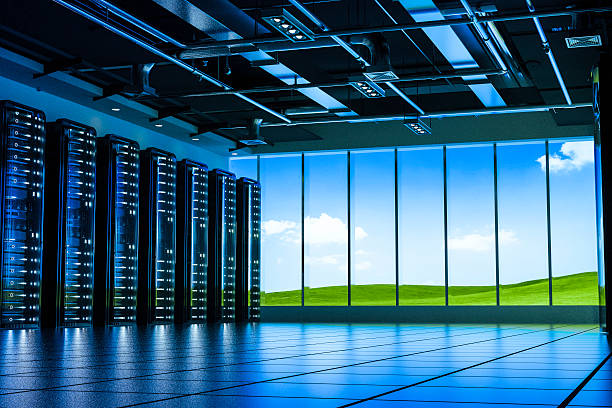
Let’s start with the basics, because much of the heat in the current Mat-Su discussion comes from people who are not entirely sure what a data center actually is.
A data center is a secure industrial facility packed with computer servers, storage systems, networking equipment, cooling systems, and backup power. Its purpose is to store, process, and deliver the data that powers our modern world, 24 hours a day, 365 days a year, with almost no downtime. If you are reading this on a computer, it likely passed through a data center.
These facilities are the backbone behind cloud storage, streaming video, online banking, remote work, and the rapid growth of artificial intelligence. They power companies like Amazon, Meta, YouTube, and Uber. AI systems require enormous computing power, and that demand is expected to drive major expansion of data centers over the next decade. Data centers are no longer optional infrastructure. They are a necessary fact of modern living and without enough of them, the digital economy slows and costs rise.

So why is Port MacKenzie being discussed?
Port MacKenzie was not chosen by accident. The Mat-Su Borough set aside thousands of acres there years ago for heavy industrial development, complete with a deep-water port and potential rail connections. A data center fits that purpose. Alaska also has real advantages. Our cold climate allows for more efficient cooling, reducing both energy use and water demand compared to warmer states.
The key issue is power. A large data center can require as much electricity as a small city. With Cook Inlet natural gas supplies tightening and potential shortages between 2027 and 2030, concerns about impacts on the Railbelt grid and residential rates are valid.
There is no shortage of noise online about projects like this. Most of it skips over the facts. Alaskans are capable of making good decisions when they are given accurate information, and that is what this discussion needs.
Those concerns can be addressed.
One practical option is to pair a data center with a dedicated local power source, such as the proposed West Susitna biomass and coal facility with carbon capture studied by the University of Alaska Fairbanks. A portion of that power could be sold directly to the data center through long term agreements. The developer would pay for the transmission and infrastructure needed, protecting residential ratepayers. Any excess power could be sold into the broader grid.
Other concerns can also be addressed with proper design.
Water use can be reduced through air cooling and closed loop systems, which work well in Alaska’s climate. Noise can be managed through setbacks, equipment design, and standard industrial controls. Data centers do not create large permanent workforces, but they do support construction jobs and generate a strong property tax base for local services. Environmental impacts are addressed through permitting, including stormwater controls, habitat protections, and full review. When paired with a modern power source using carbon capture, emissions can be competitive with other generation options.
This conversation reached a turning point with Mayor Edna DeVries’ veto of Resolution 26-019. That veto was not a rejection of data centers. It raised legitimate concerns about process, including moving too quickly, allowing a private company to represent the borough, and limiting public review. All good reasons for the mayor to pump the brakes.
The Assembly has now overridden that veto. That decision moves the conversation forward, but it does not replace the need for clear information, honest conversation, and public understanding of what is actually being proposed.
Port MacKenzie was zoned for projects like this. The University of Alaska study shows the power concept is feasible. That does not mean automatic approval. It means a fair, evidence-based process.
~ Developers should pay their full share of infrastructure.
~ Standards for noise, water, and environment should be clear and enforceable.
~ Power arrangements should protect residential ratepayers.
~ The public should have a real opportunity to review the details.
That is responsible development and no one I know wants to change that.
Alaska often says it wants economic growth, a broader tax base without new taxes, strong schools and infrastructure, and less reliance on oil and the Permanent Fund. The Mat-Su Borough has an opportunity to be part of that future.
We can continue turning away projects and wonder why investment goes elsewhere, or we can show that we are open for business with clear rules and high standards.

The digital economy is already here. The question is whether the Mat-Su will help power it or watch it happen somewhere else. With the land, the climate advantage, and credible technical work already in hand, this is an opportunity that deserves a serious look.
We must find a way to diversify our revenue stream while responsibly developing our resources. Just saying no, without all the relevant information is a mistake of epic proportions for our state and our children.
How do we get to yes?
Originally published on Substack: https://kevinjmccabe.substack.com/p/what-is-a-data-center-and-why-does