

Two old lines have been on my mind lately.
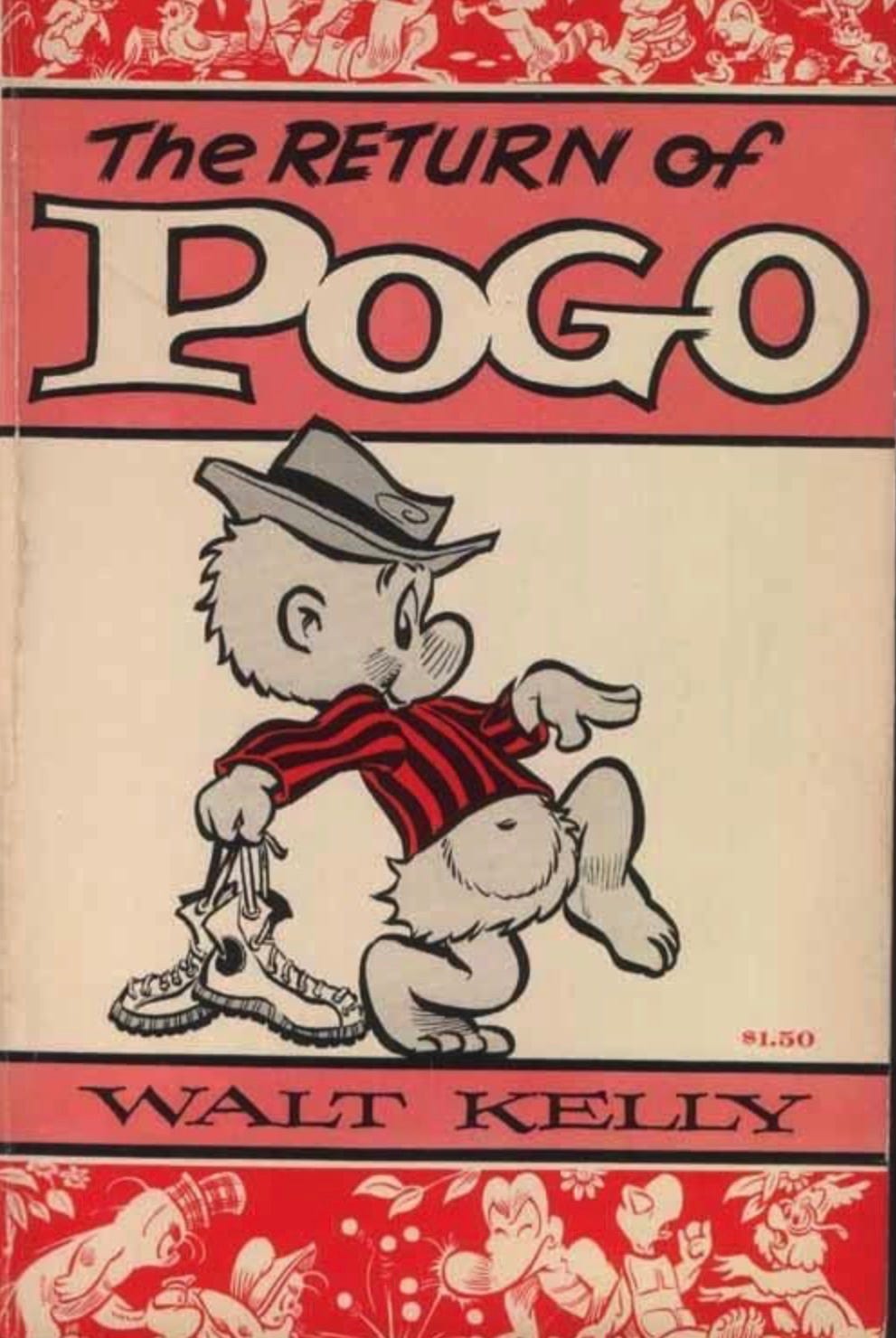
The first is Walt Kelly’s: We have met the enemy, and he is us.
The second, often attributed to Field Marshal von Moltke: No plan survives first contact with the enemy.
Taken together, they describe where the Alaska Republican Party finds itself better than anything I have heard in recent months. We are not losing ground because Democrats have suddenly become more persuasive, and not because Alaskans have abandoned conservative ideas. We are losing ground because we spend too much time turning inward, and because every strategy we build tends to come apart the moment it meets a real person with an opinion that differs from ours by five degrees.
That is not a messaging problem. It is a leadership problem.
And it starts with something simple that many people do not want to hear:
leadership is not supposed to be comfortable. And it is not the leader’s
job, nor the party’s job, to make you feel comfortable either.
Watch the pattern long enough, whether in Juneau, at a district meeting, or in the comment section of half the conservative Facebook pages in the state, and it becomes familiar. A legislator takes a position. It is researched, defensible, rooted in conservative principle. Within forty-eight hours, someone who has not read the bill, attended the hearing, or sat through a single committee meeting has decided the vote is a betrayal. The label goes up. The knives come out. And the demand, although it is rarely stated this way, is that the legislator come back into line so everyone else can feel comfortable again.
Comfortable that the tribe is intact. Comfortable that the enemy is out there, not in here. Comfortable that the story they tell themselves about who is pure and who is compromised still holds.
That is not accountability. It is a demand for reassurance dressed up as principle. And when leaders respond to that pressure, when they smooth over differences instead of working through them, the party loses a little more of its ability to function in the real world.
Edwin Friedman had a name for this. He called it a failure of nerve. A leader can hold steady under pressure, define direction, and tolerate the fact that not everyone will be pleased, or he can absorb the anxiety around him and let it shape his decisions. The second path feels cooperative. In practice, it is accommodation wearing a leadership nametag.
Conservatives, by disposition, tend to be type A. We are former military, commercial pilots, small business owners, resource workers, fishermen, and engineers. We have spent our lives being rewarded for being right, being decisive, and overriding the opinions of people who did not know what they were talking about.
Those are virtues in a cockpit, on a job site, or on a fishing boat. They are a mixed blessing in a political party.
The same instincts that make a good pilot, the certainty and the confidence that you have already thought this through and the other guy has not, become a real problem when forty of those people are in the same room trying to decide what the party should do next. Everyone has already run the numbers. Everyone already knows the answer. Everyone is already sure that anyone who sees it differently is ignorant, compromised, or a RINO.
That is not a coalition. That is a collection of people who each think they are the coalition.
And this is where Moltke’s observation comes back into play. Plans do not fail because they are written poorly. They fail because they meet reality, and reality includes people who agree with you most of the time but not all of the time. In our case, the enemy is often not the Democrats or the press. It is the guy three chairs down who agrees with you on ninety-two percent of everything but has a different read on the one issue currently on the table, and who is now, in your mind, the reason the whole thing is falling apart.
Politics is a messy business when dealing with humans. It is messier still when the humans involved are largely convinced they already have all the answers
None of this means the base should be ignored, or that leaders should operate without accountability. The opposite is true. A healthy party depends on engaged members who ask hard questions and expect real answers. That is the top-down managerial model I have argued against before, and I am not going to turn around and argue for it now.
But what leaders owe in return is honesty, not comfort. A clearly defined direction, not constant reassurance that everyone in the tent still likes everyone else. The hard conversation in the committee room, not the soothing press release afterward.
The party owes its members the same thing. The job of the AKGOP is not to make every Republican feel validated every week. The job is to win elections, advance conservative policy, and build a durable majority that can actually govern this state. You cannot do that while simultaneously trying to make sure no one ever feels challenged, outvoted, or uncomfortable.
Scripture does not describe leadership as comfortable either. Nathan did not walk into David’s palace to make David feel better. He walked in to tell the truth. The reason that story still matters three thousand years later is not that Nathan was gentle. It is that Nathan was right, and David had the character to hear it.
We could use more Nathans in this party. And more Davids too. People willing to say the hard thing, and people willing to hear it without throwing a tantrum or reaching for the nearest label to throw back under the guise of “accountablility.”
If every time a legislator casts a vote you do not like, your first instinct is to question whether he is really one of us; if every time a plan fails to survive reality, your first instinct is to look for a traitor instead of a lesson, then you are not holding them accountable. You are making the party ungovernable.
Every plan this party makes will have first contact with reality. A bill will split the caucus. A candidate will say something nobody anticipated. A governor will make a call some of us love and some of us hate. The plan will bend, and in some cases break, because that is what plans do when they meet humans.
The question is not whether we can build a plan that survives first contact. No such plan exists. The question is whether we can build a party culture that survives it. A culture steady enough to absorb disagreement without fracturing. A leadership corps willing to tolerate discomfort rather than chase approval. A base mature enough to distinguish between a bad actor and a fellow traveler who simply sees one issue differently.
That’s the work. It is not comfortable. It is not supposed to be.
And if we can do it, we will stop being our own worst enemy, and start being something the other side actually has to plan around.