

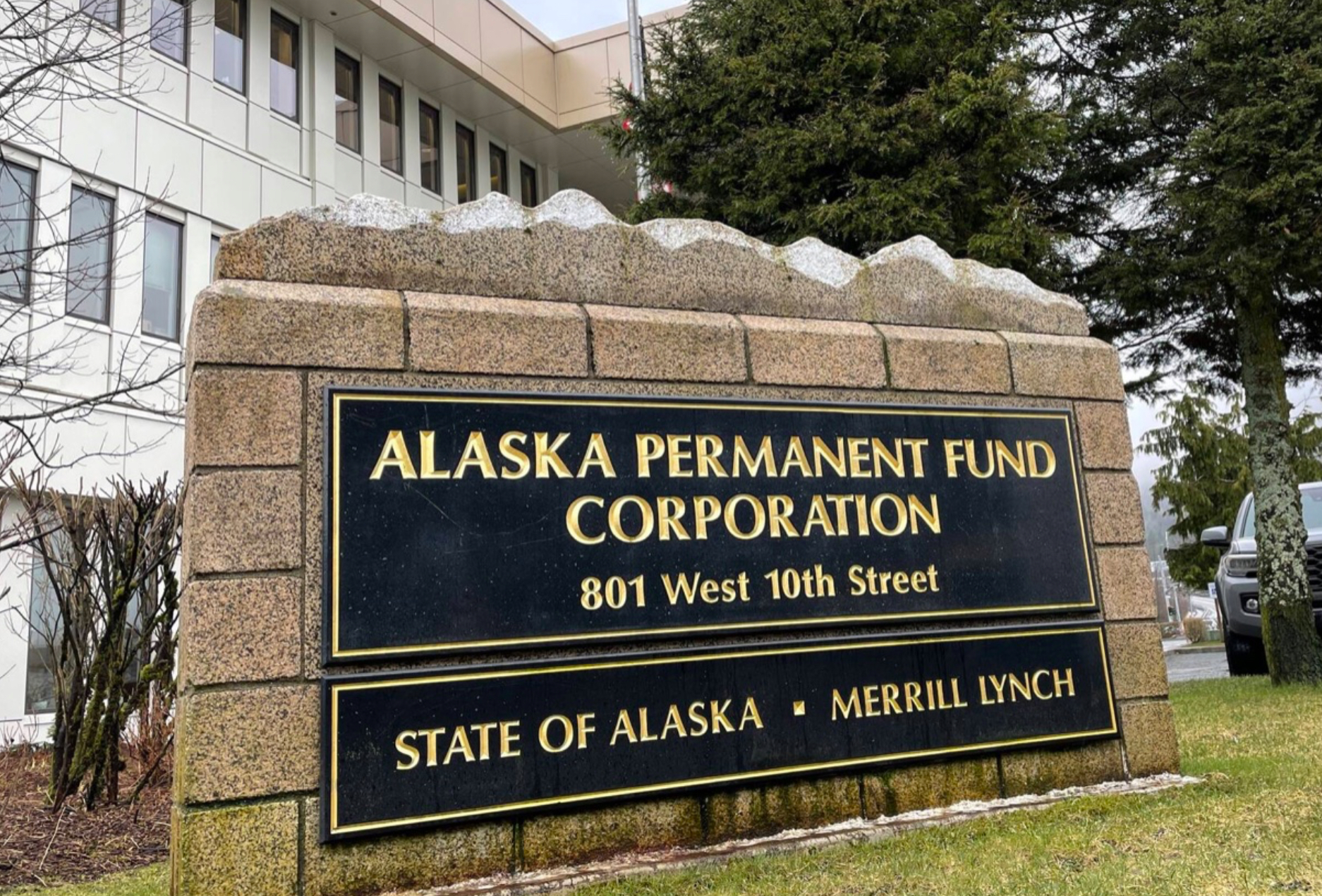
When the Permanent Fund Dividend was created after the 1976 constitutional amendment, the intent was clear. A portion of our oil wealth was to be set aside for government. A few years later the dividend was created to provide some of that wealth to the people themselves. For nearly fifty years that dividend has helped families heat their homes, put food on the table, and buy school supplies. It has injected billions into local economies from Barrow to Ketchikan. But since 2016, when Governor Walker cut the dividend in half, it has been treated as a political tool, reduced or delayed whenever spending pressures mount.[1]
I have tried to be consistent on this issue. Article IX, Section 15 of our Constitution makes it clear that the earnings of the Permanent Fund are for the benefit of Alaskans, “as provided by law.” The law that sets the dividend formula is still on the books. It is not government largesse. It is the people’s inheritance, their share of the resources beneath their feet. I have said since my first campaign speech that any attempt to change that compact should go before the voters.[2]
Before I was elected in 2020, I wrote about this on my website and later on Substack. In How Does the PFD Belong to You? I pointed out that the 2015 shift in language from “transfer” to “appropriation” opened the door for legislators to use dividend money for government operations. I argued then, as I do now, that this was never the intent. That there should be plenty of money to fund government and pay the PFD. We just need to limit programatic increases and frivolous programs. And across my district the dividend is not an abstract policy. It can mean whether a family stays afloat through winter or they actually leave the state.[3]
My Substack posts have been a way to show the public what really happens in Juneau. In The PFD Circus (April 2025), I described how House Democrats broke a caucus pledge and pushed a budget amendment that cut the dividend to $1,400 by splitting earnings 75–25 in favor of government spending. I wrote that in the legislature all you really have is your word and when that is broken, public trust erodes. In Union’s Contribution to Alaska’s Budget Woes, I warned that unchecked growth in education and healthcare spending would eventually consume the dividend unless we adopt spending caps and constitutional safeguards.[4]

My votes have followed the same principle. In 2021, I said plainly on the House floor, “We either follow the law [and] we are going to vote for a full PFD. Or we are not going to vote for a full PFD.” That year my amendment for the full amount failed 20–20, but the principle was clear. I have voted against partial dividends that bury the PFD in bloated budgets, and I have voted for budgets that honored the full formula. This includes the 2022 concurrence vote on HB281 that would have paid more than $5,500 with energy rebates; a vote that was negated by two of my fellow valley delegation members who ran their campaigns on the idea of a full PFD. In 2023 I opposed the Senate’s 75–25 split, calling it a nonstarter. In 2024 I supported a constitutional amendment to enshrine the full dividend, even though it fell short. In April 2025 I voted against a budget that left a $450 million deficit while shrinking the dividend to $1,400.[5]
The press has covered these battles closely. The Anchorage Daily News printed my op-ed in 2021 calling for the dividend to be paid first, not last.[6] The Alaska Beacon has noted my resistance to cutting the dividend during negotiations and my warnings that overspending in other areas squeezes out the PFD.[7] Must Read Alaska has carried my own columns, including Dividend, Now Buried in the Operating Budget (September 2024) and Alaska’s Constitutional Mandate and the Legislature’s Capital Budget Shortfall (June 2025), where I described these diversions as outright theft.[8]
None of this is easy. Dividend fatigue is real, and people are weary of the fight. Betrayals across caucus lines, such as in the 2025 House flip, or the 2022 concurrence vote, have tested relationships. Critics call me names, attack me personally, and file frivolous complaints, and sometimes lump me in with those who would happily reduce the PFD. But my record is there in black and white, and it is better than those who my critics support. I have voted and spoken for a full dividend every time I had the change.
But the question to all my voters is this: “Is the full PFD still the direction we need to go?” I firmly believe Governor Hammond said it best in Diapering the Devil when he wrote:
“My rationale for creating such an investment account and making shareholders of Alaskans was manyfold:
1. I wanted to encourage contributions into the investment account and to protect against its invasion by politicians by creating a militant ring of dividend recipients who would resist any such usage if it affected their dividends.
2. I wanted to transform oil wells pumping oil for a finite period into money wells pumping money for infinity. It was apparent that unless we did so, politicians would spend every windfall to satisfy insatiable short-term needs and demands, only to find themselves in a world-of-hurt when oil wealth declined. Such had been the experience of virtually every oil-rich state and nation.”[9]
However, I have had many emails to my office that indicate it is time to move on from the thought of a full PFD. But should we? Keep in mind, that the dividend, according to Hammond, is more than just a payment to Alaskans for their oil wealth. It is in fact the firewall that keeps the legislature from dipping into the corpus and spending that down to zero. You can see that push now in the pressure to combine or eliminate the ERA. This could trigger all sorts of bad things such as reducing the level of legislative votes to access accounts, or eventually even allowing the legislature access to the corpus. I believe this, more than anything, should keep us fighting for a full PFD. I will continue to do so unless the majority of my district says to stop, as I feel it is necessary to provide that firewall.
The path forward is still the same. We need to enshrine the PFD in the Constitution and pay Alaskans first. If you want a spending cap, as the Alaska Chamber does, then a full PFD provides that. Without the protection of the Constitution, however, the PFD will always be vulnerable to the next fiscal crisis or the next political maneuver.
The PFD is more than a check. It represents ownership, sovereignty, and trust. My goal is to keep that promise intact for the generations that will follow us. Alaskans must be able to vote on the use of the PF and the PFD.
Footnotes
“Walker Vetoes Half of Alaska Permanent Fund Dividend,” Anchorage Daily News, June 29, 2016. https://www.adn.com/politics/2016/06/29/walker-vetoes-half-of-alaska-permanent-fund-dividend/
Alaska Constitution, Article IX, Section 15. https://ltgov.alaska.gov/information/alaskas-constitution/
Kevin McCabe, How Does the PFD Belong to You?, Substack. https://kevinmccabe.substack.com/p/how-does-the-pfd-belong-to-you
Kevin McCabe, The PFD Circus, April 2025, Substack; Kevin McCabe, Union’s Contribution to Alaska’s Budget Woes, Substack. https://kevinmccabe.substack.com/
Alaska State Legislature, House and Senate Floor Votes, 2021–2025. http://www.akleg.gov/
Kevin McCabe, “Pay the Dividend First,” Anchorage Daily News, 2021. https://www.adn.com/opinions/2021/
James Brooks, “Alaska Lawmakers Debate Dividend Cuts Amid Budget Pressures,” Alaska Beacon. https://alaskabeacon.com/
Kevin McCabe, Dividend, Now Buried in the Operating Budget, Must Read Alaska, Sept. 2024; Kevin McCabe, Alaska’s Constitutional Mandate and the Legislature’s Capital Budget Shortfall, Must Read Alaska, June 2025. https://mustreadalaska.com/
Jay Hammond, Diapering the Devil, 2011, Institute of Social and Economic Research, University of Alaska Anchorage. https://iseralaska.org/static/legacy_publication_links/HammondDiaperingDevil.pdf
Originally published on Substack: https://kevinjmccabe.substack.com/p/the-permanent-fund-dividend-revisited