

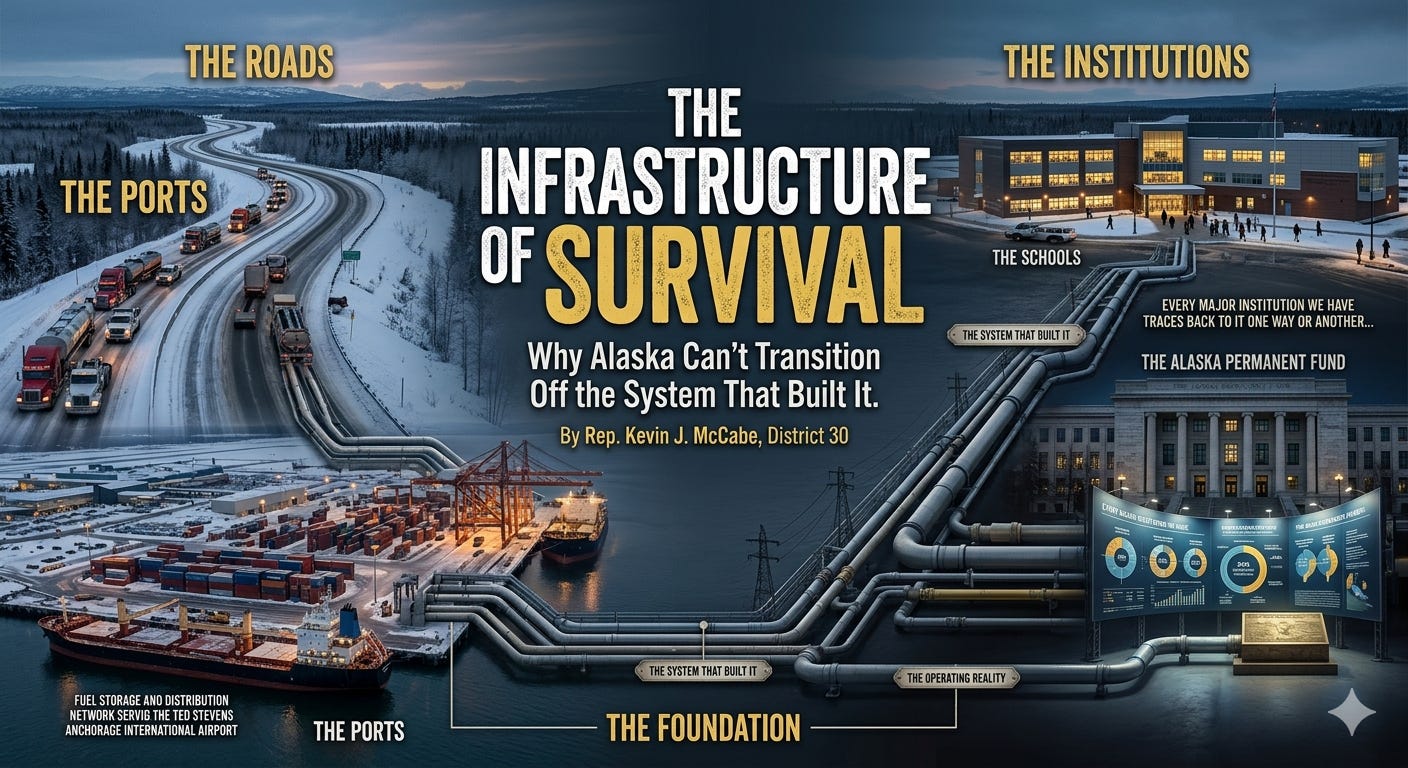
There is a basic reality in Alaska politics that too many people are pretending can simply be talked away.
Modern Alaska was built by resource development. Every major institution we have traces back to it one way or another. The roads, the ports, the schools, the Permanent Fund, even the basic expectation that Alaska can function without a state income tax, all of it comes from the same foundation. That’s not theory, and it’s not nostalgia. It is the operating reality of how this state still pays its bills today.
Since statehood, Alaska’s oil and gas industry has generated roughly $274 billion in revenue for the state. For decades it funded the overwhelming majority of the unrestricted general fund. The Trans-Alaska Pipeline changed Alaska from a young and financially unstable state into one capable of building out basic statewide infrastructure at a scale that would not have been possible otherwise.
The 1969 Prudhoe Bay lease sale alone generated nearly $900 million in a single afternoon, roughly eight times the entire state budget the previous year. That one event altered the trajectory of this state for generations.
Every Alaskan alive today has benefited from that system whether they acknowledge it or not. Every school district operating budget, every major capital project, every year without a statewide income tax, every Permanent Fund Dividend check, all of it traces back to resource production.
That is not ideology. It’s arithmetic.
Yet Alaska’s political conversation has increasingly moved toward the idea that we can rapidly transition away from the very industry that funds the structure of state government itself. In 2024 the Alaska Democratic Party adopted a platform opposing ANWR development, opposing Pebble Mine, supporting carbon pricing intended to suppress fossil fuel demand, and calling for a rapid transition away from oil and gas. At the same time, many of the same Democratic voices are demanding larger operating budgets, mega education spending, and expanded public services.
Those positions eventually collide with reality.
The conversation becomes even more disconnected once people begin speaking about renewable energy as though it somehow replaces state revenue. It does not. A wind turbine does not provide a volumetric royalty or fund the Permanent Fund. Solar panels do not pay severance taxes to the general fund or pay for education. Good intentions are not a fiscal plan. That does not mean renewable energy has no place in Alaska. It clearly does. Rural energy costs are crushing many communities. Cook Inlet gas is declining. Railbelt reliability matters. Those are legitimate concerns that deserve serious discussion.
But slogans are not infrastructure, and press releases are not energy policy.
NREL projects an 80 percent renewable Railbelt by 2040, and on paper the numbers look attractive. Read the assumptions and the picture changes. Much of the claimed savings depends on federal subsidies and tax credits from the Inflation Reduction Act. If future Congresses eliminate them, much of the projected advantage disappears. And the Railbelt is the easy part. More than 200 rural villages still run on diesel. Replacing that infrastructure would cost billions, much of it dependent on federal support that may not exist a decade from now.
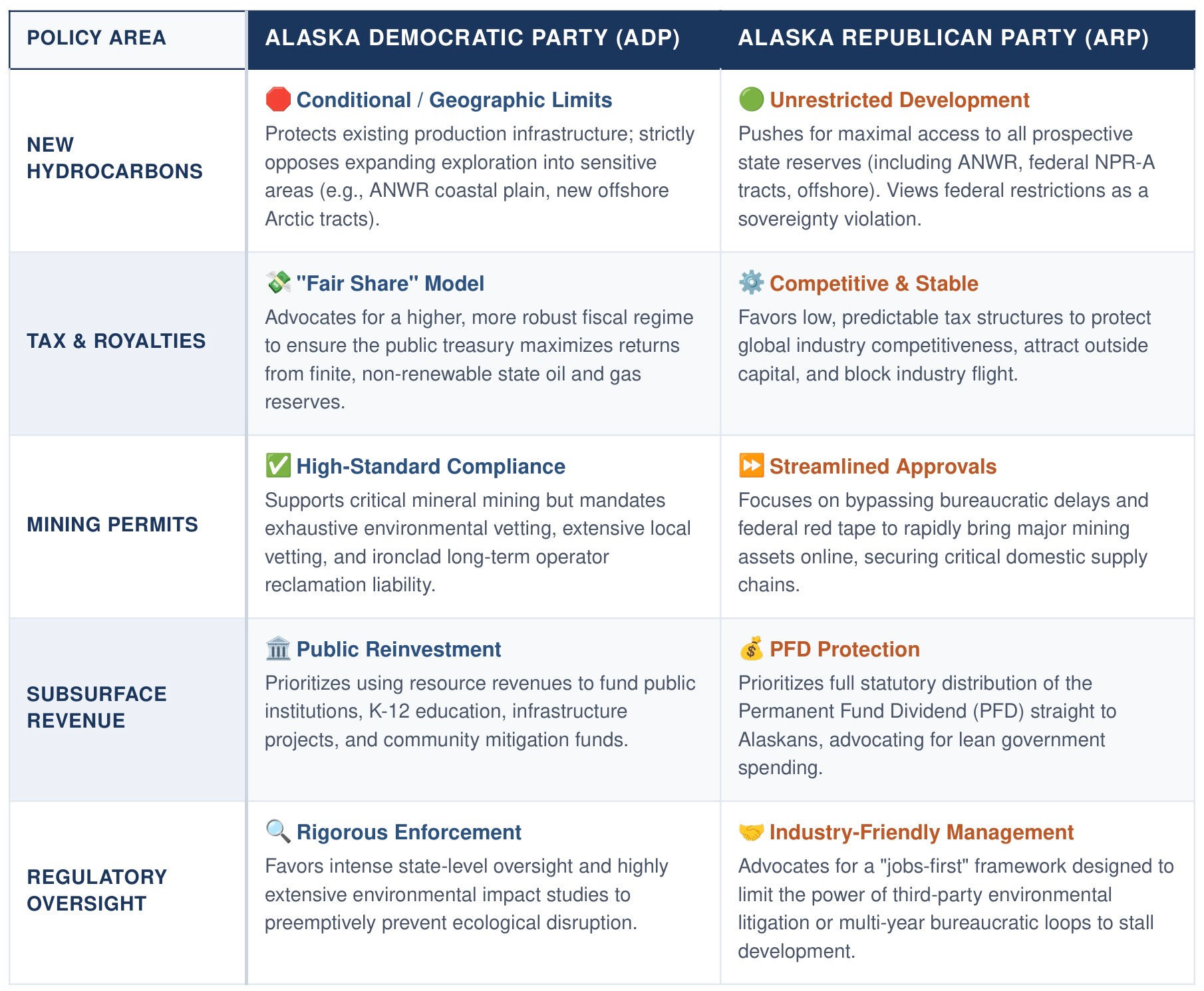
At the same time, Alaska Democrats have still not answered the larger fiscal question. If the state intentionally suppresses future oil and gas production, what replaces the revenue stream supporting state government itself? The answer usually becomes vague references to “diversification” or “new revenue sources,” which in Juneau generally means some form of statewide tax structure Alaskans have rejected repeatedly for decades.
Republicans also need to be honest about part of this conversation.
Production is not returning to 1988 levels simply because federal administrations change. Prudhoe Bay matured years ago. Reservoirs decline. Willow will help. ANWR can help. Additional Cook Inlet exploration and AKLNG can help. None of that changes the fact that Alaska now faces a different long-term production environment than the one that existed forty years ago. We must evolve.
Which is exactly why infrastructure matters so much.
The debate in Juneau cannot continue as a simplistic argument over whether resource development itself is good or bad. The real question is whether Alaska is still willing to build the infrastructure necessary to make resource development possible at all.
That means roads, rail, ports, transmission lines, gas pipelines, access corridors, and industrial capacity. Resources stranded in the ground do not support schools or fund public safety. They become economically meaningful only when infrastructure exists to move them to market.
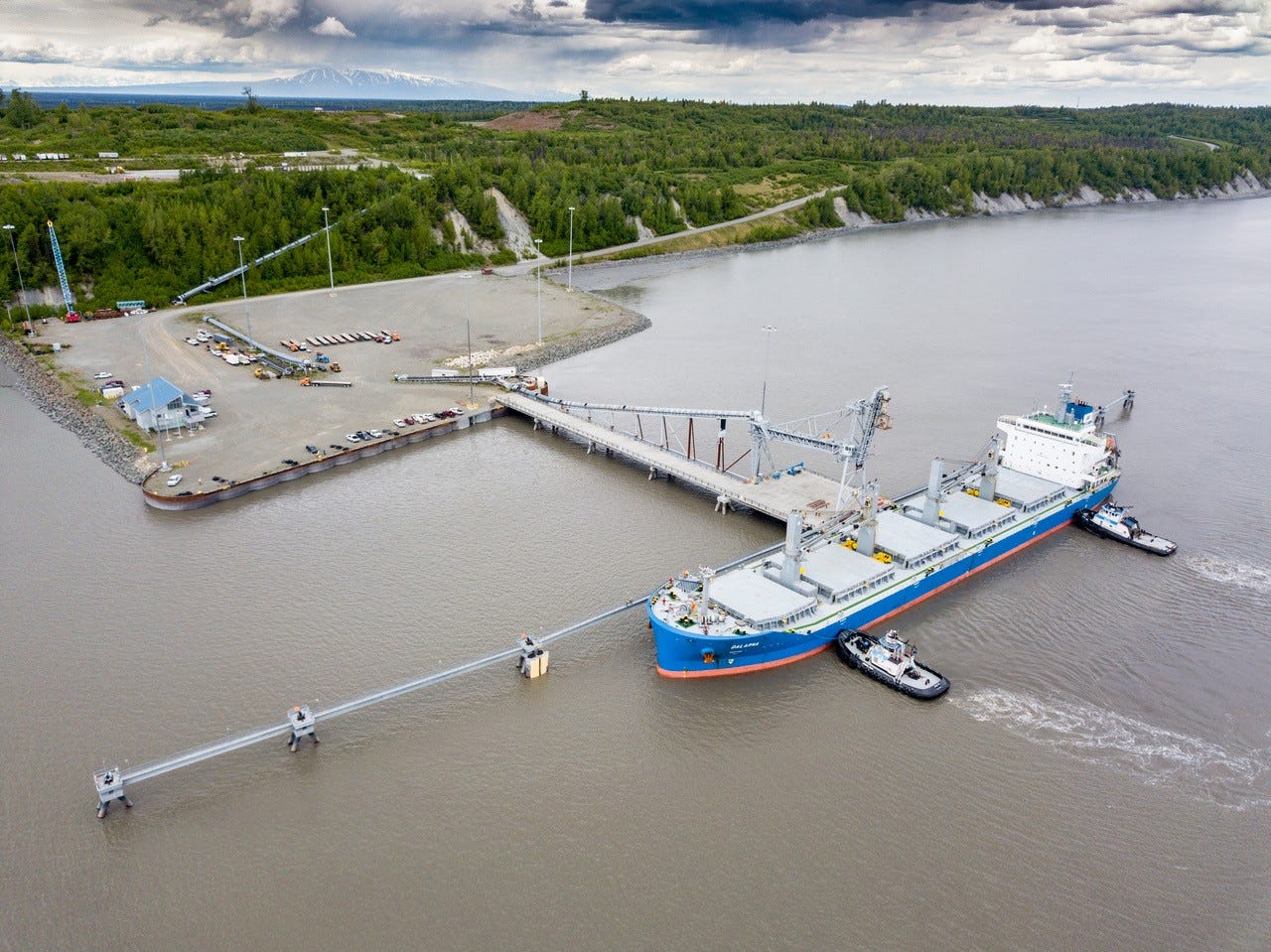
Port MacKenzie is a perfect example. Alaska has already invested heavily there. The rail extension corridor largely exists. The right-of-way is secured. Permitting has largely been completed. Yet year after year the project sits in political limbo while costs continue increasing. At some point Alaska has to decide whether these projects are actually priorities or whether we intend to spend another twenty years holding hearings about them.
The same pattern exists with the West Susitna Access project, which would open access to substantial mineral potential including antimony and other critical minerals increasingly important to national defense and industrial manufacturing. China currently dominates large portions of the global antimony market while Alaska argues over whether basic access infrastructure should even exist. The contradiction becomes obvious when the same political groups demanding rapid renewable electrification simultaneously oppose the domestic mining projects necessary to supply the copper, zinc, graphite, and rare earths that transition actually requires.
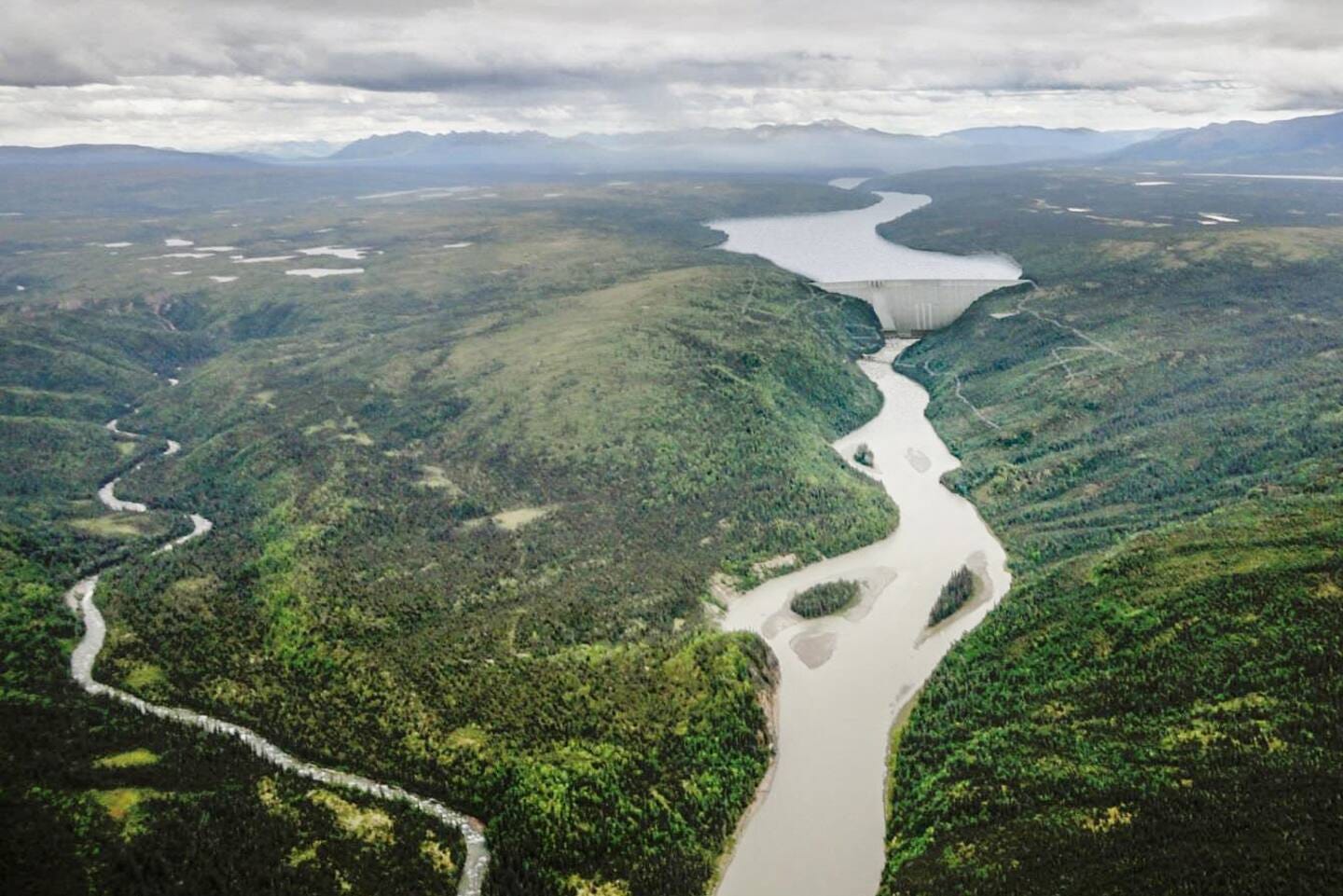
Then there is Susitna-Watana. One of the largest long-term hydroelectric opportunities in North America was effectively abandoned after years of political opposition and litigation. Alaska walked away from a major source of long-term baseload power while continuing to complain about future energy reliability and carbon emissions.
The path forward is not mysterious. Alaska needs to keep producing oil and gas while we still have viable reserves. We need to finish the infrastructure projects we have spent decades talking about. We need cheaper energy. We need to develop our own critical minerals instead of importing dependency from countries that do not share our interests.
And we need to elect legislators who will actually build, not legislators whose party platform commits them to opposition before the hearing even starts.
The AKLNG fight playing out in Juneau right now shows exactly what is at stake. HB 381 and SB 280, the Governor’s bills, were written to help a project get built. They replace the front-end property tax burden with a volumetric tax that aligns the state’s take with actual gas flowing through the pipeline. SB 275, the Senate Resources rewrite, keeps the existing property tax, layers on a 9.4 percent corporate income tax, adds a surcharge two and a half times the volumetric rate proposed in SB 280, and eliminates a cross-commodity deduction producers have used for years to finance North Slope work.
Two bills. Same pipeline. Two completely different philosophies. One is written to help a project get built. The other is written to maximize the state’s take whether the project gets built or not.
That contrast is not an accident. It tracks the party platforms almost exactly. And it is happening in real legislation, right now, with the session clock running out. This is not a future election promise. This is a live vote. Alaskans should pay attention to who is voting which way, and remember it in November.
What we are really talking about now is whether we continue building on the foundation that made modern Alaska possible, or whether we convince ourselves that we can step away from it without consequence.
Most states can afford to have that debate in the abstract.
Alaska cannot.