

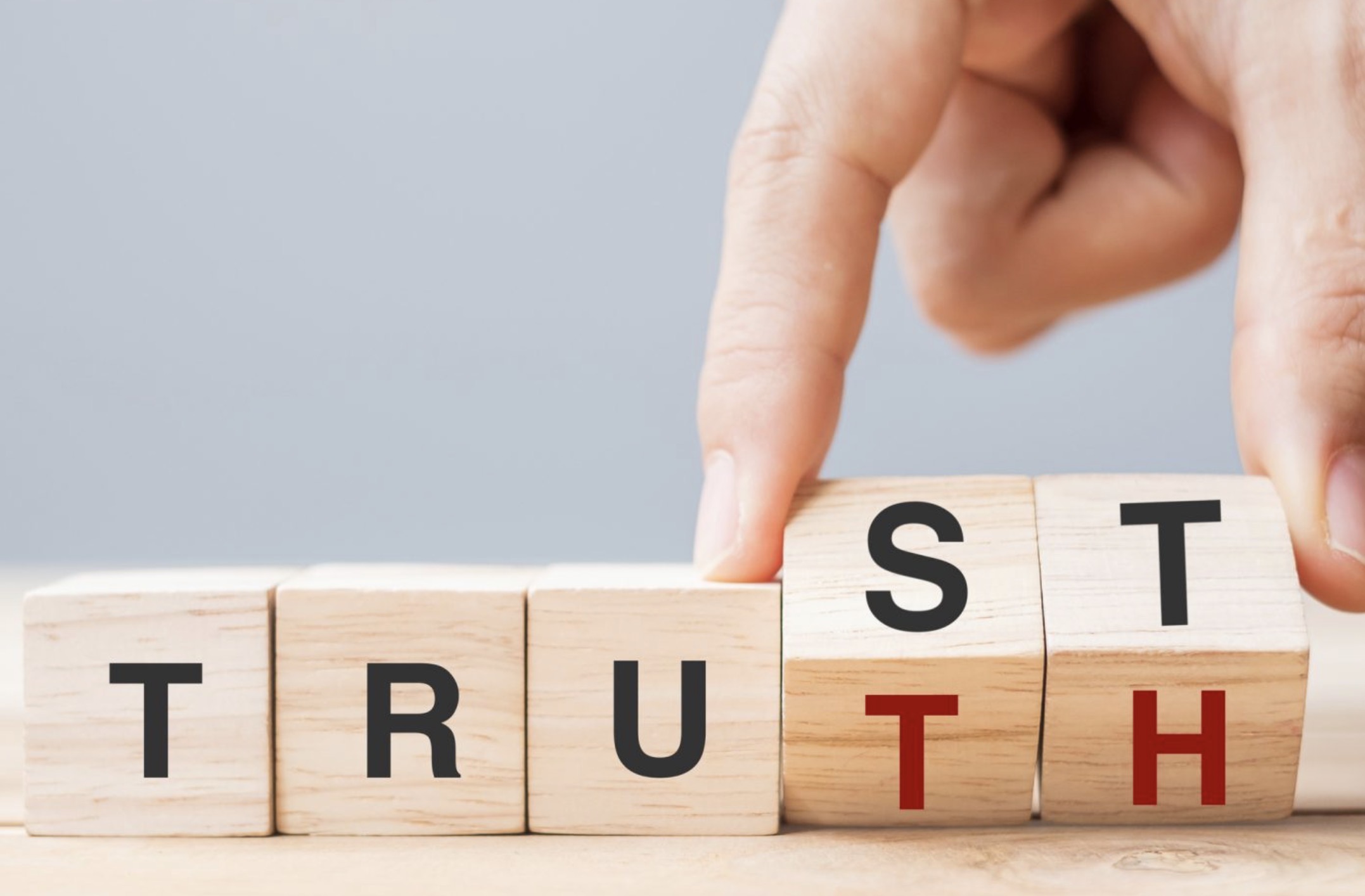
Trust is the currency of leadership. Without it, nothing else works. People will not follow, collaborate, or take risks for a leader they do not believe. When a leader lies, even a temporary or informal leader, the damage goes far beyond a single false statement. It signals contempt for the people depending on and following them and places self-interest above the responsibility to serve the team. That breach is not abstract. It is personal, and it cuts straight to the foundation of authority.
Durable leadership is built by telling your team the truth, especially when it is uncomfortable or places your own actions in a bad light. That means explaining the real reasons behind decisions, admitting mistakes early before they metastasize into scandals, and making sure public statements line up with private facts.
Culture follows conduct.
Once team members catch a leader in a deception, every future statement is suspect. Even so-called white lies are not harmless. They tell the people closest to the leader that truth is negotiable, that convenience outweighs integrity. Initiating a team on a bed of lies may work briefly, but small falsehoods inevitably compound. Leaders end up deceiving not to lead, but to cover previous missteps. Influence collapses when dishonesty becomes a habit.
From inside a team, the effect is corrosive. Lies create suspicion, and suspicion kills teams. When leaders deceive, they quietly give permission for others to do the same. Ethical standards erode, morale drops, and cohesiveness and cooperation suffer because people spend more time protecting themselves than doing the work. Some loyalists may continue to defend a dishonest leader if the falsehoods fit their agenda or reinforce their preconceptions, but that loyalty is thin and temporary. Eventually reality intrudes, and when it does, the fallout is worse because trust has already been spent.
Leadership does not require being liked. It requires being respected. Respect is earned through competence, consistency, and integrity. Lying destroys all three. Once the people closest to a leader conclude they are being misled, disengagement follows. Debate and agreement are slow-walked. Advice becomes guarded. In severe cases, deceptions trigger leaks or public revolt by team members. Authority does not disappear overnight, but it hollows out fast.
Nowhere is this dynamic more dangerous than in political leadership, where trust is both more fragile and more essential. Political leaders operate under intense scrutiny and constant pressure, and the public already holds politicians in low regard when it comes to honesty. That cynicism does not protect dishonest leaders. It exposes them. Voters may roll their eyes at spin, but insiders do not. Caucus members, staff, commissioners, coalition partners, and agency heads work close enough to see the seams. They know when the public story does not match the private reality, and they know when a lie touches one of their own. A leader cannot lie about a team member and expect that member to follow them for long.
When political allies and team members detect deception, the damage is swift and often fatal. Politics runs on trust within teams and between partners. The old adage, “the only thing you have in politics is your word,” becomes reality. Power depends on collective buy-in. Once lies enter the equation, alliances fracture. Today’s ally becomes tomorrow’s skeptic, leaker, or vocal opponent. Governing becomes impossible because no one believes the rationale behind decisions, and no team member is willing to carry water for a leader they do not trust.
In a system saturated with spin and half-truths, the leader who consistently tells the truth stands out. Not because they are perfect, but because they are credible. Those leaders attract capable people who want to do real work, not clean up messes. They weather crises with unified teams because trust has already been built. Their teams are resilient, not brittle, because they are grounded in reality rather than illusion.
When dishonesty has already occurred, recovery is possible, but only through accountability. That means full acknowledgment, not hedging. It means apologies that recognize the harm done, not excuses that minimize it. Most importantly, it means sustained honesty in word and deed afterward. Trust is rebuilt slowly, if at all. Prevention remains far easier than repair.
The lesson is as simple as it is unforgiving. Respect, not likability, is the foundation of lasting leadership. Nothing forfeits that respect faster than lying. In politics, where power is shared, alliances are fluid, and credibility is everything, dishonesty is not just a moral failure. It is a strategic one.
Originally published on Substack: https://kevinjmccabe.substack.com/p/the-destruction-of-trust