

In April I wrote about the digital whirlpool of manufactured outrage that surrounds every major project in Alaska. In May I followed up with The Country That Builds Wins, arguing that the campaign against American data centers is one front in a cold war with China. Last week I wrote about the historical pattern of infrastructure panics in America, electricity, the automobile, the telephone, and how each was, in its time, painted as a civilizational threat before becoming indispensable.
This essay is the part I have not yet said plainly. The historical pattern is real, but this time something is different. A great many Alaskans, sincere and well-meaning, are right now being recruited to fight on the Chinese side of a cold war they do not know they are in. Most of them do not know it. None of them intend it. But the campaign they have joined was designed twenty-five centuries ago by a Chinese general named Sun Tzu, and Beijing has been reading him continuously since. We, by and large, have not.

Sun Tzu’s central teaching, from around 500 BC, is that the highest victory is the one in which the enemy defeats himself. “Supreme excellence consists in breaking the enemy’s resistance without fighting.” A skilled strategist does not need armies. He needs only to arrange the conditions of the battlefield so completely that the enemy lays down his weapons without being told to.
The campaign against American data centers is the most successful application of that doctrine in the modern era.
Sun Tzu wrote, “All warfare is based on deception.” Beijing tells American audiences that data centers are environmentally reckless while building ninety-four gigawatts of new coal-fired generation in a single year to power its own. The deception is not in any sentence. It is in the gap between the message and the messenger’s own behavior.
Sun Tzu wrote, “Attack him where he is unprepared.” The American national security apparatus is built to detect missiles and cyber intrusions. It is not built to detect a years-long influence campaign waged through nonprofit grant flows, algorithmic amplification, and talking points dropped into county hearings. The attack surface is the Mat-Su Borough Assembly meeting. No one in Washington imagined it would need defending.
Sun Tzu wrote, “Avoid what is strong and strike at what is weak.” America’s strength is its capital, its engineers, its energy resources. Its weakness is the seam between the company that wants to build and the local body that can stop it. That seam is where every American infrastructure project lives or dies. A Chinese strategist would identify it in an afternoon. The campaign against the Terra Energy Center is not aimed at Wall Street or the Department of Energy. It is aimed at the borough assembly. That is doctrine, not coincidence.
And Sun Tzu wrote, most importantly for Alaskans to hear, “The good fighter is able to secure himself against defeat, but cannot make certain of defeating the enemy.” Victory, in his system, is determined by the loser’s mistakes. China cannot force America to stop building. It can only create conditions in which Americans choose to stop building themselves. Every moratorium, every lawsuit, every viral post is a small American decision that, in aggregate, becomes the strategic outcome Beijing is seeking.
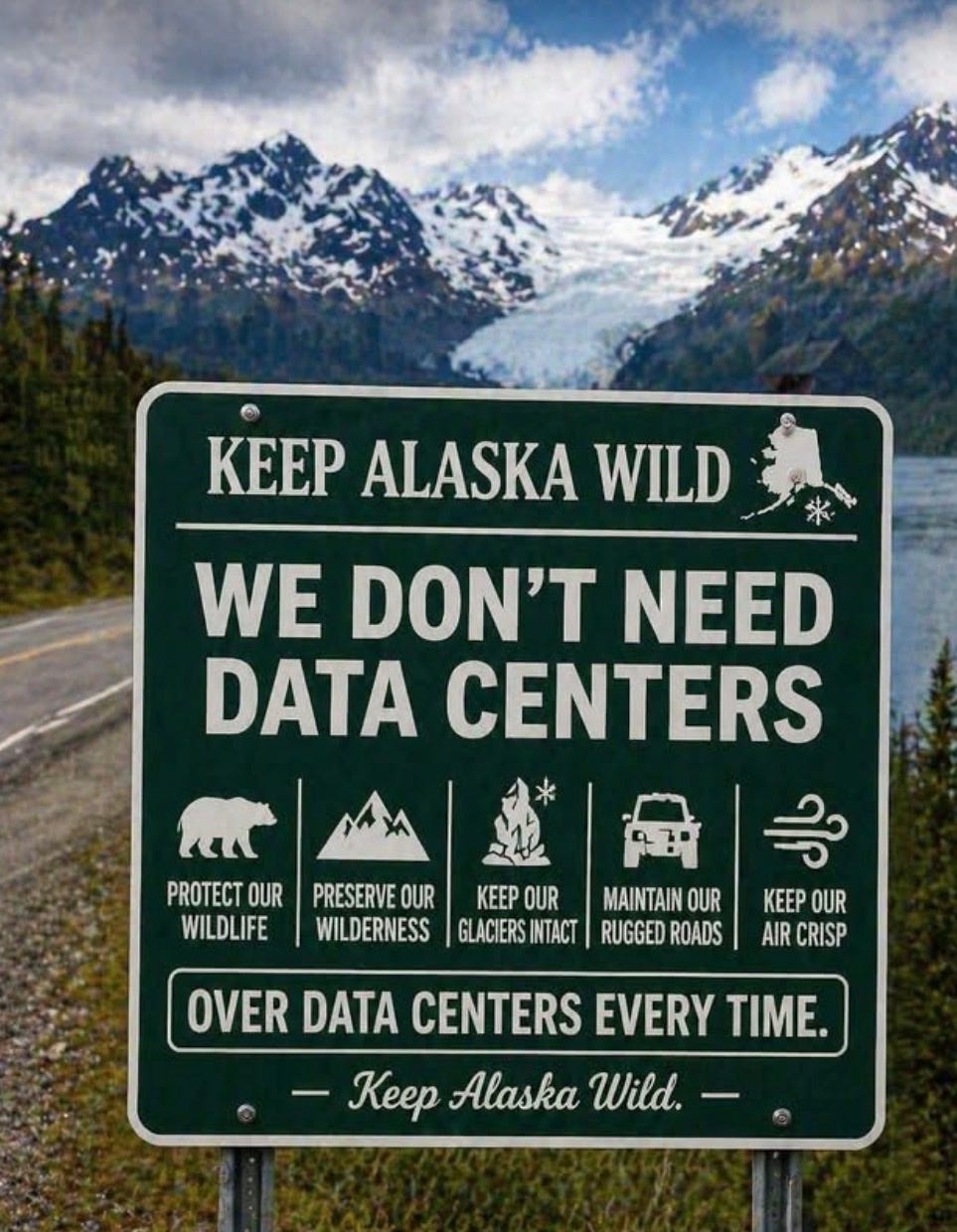
We are not being defeated. We are defeating ourselves, with foreign help, on terms the foreign party finds convenient.
When a neighbor in Mat-Su stands at the borough assembly and reads a script about water consumption at the Terra Energy Center, that neighbor is not a Chinese agent. She is a sincere person with a sincere concern. The local worries are real. Water matters. Transmission matters. Community impact matters.
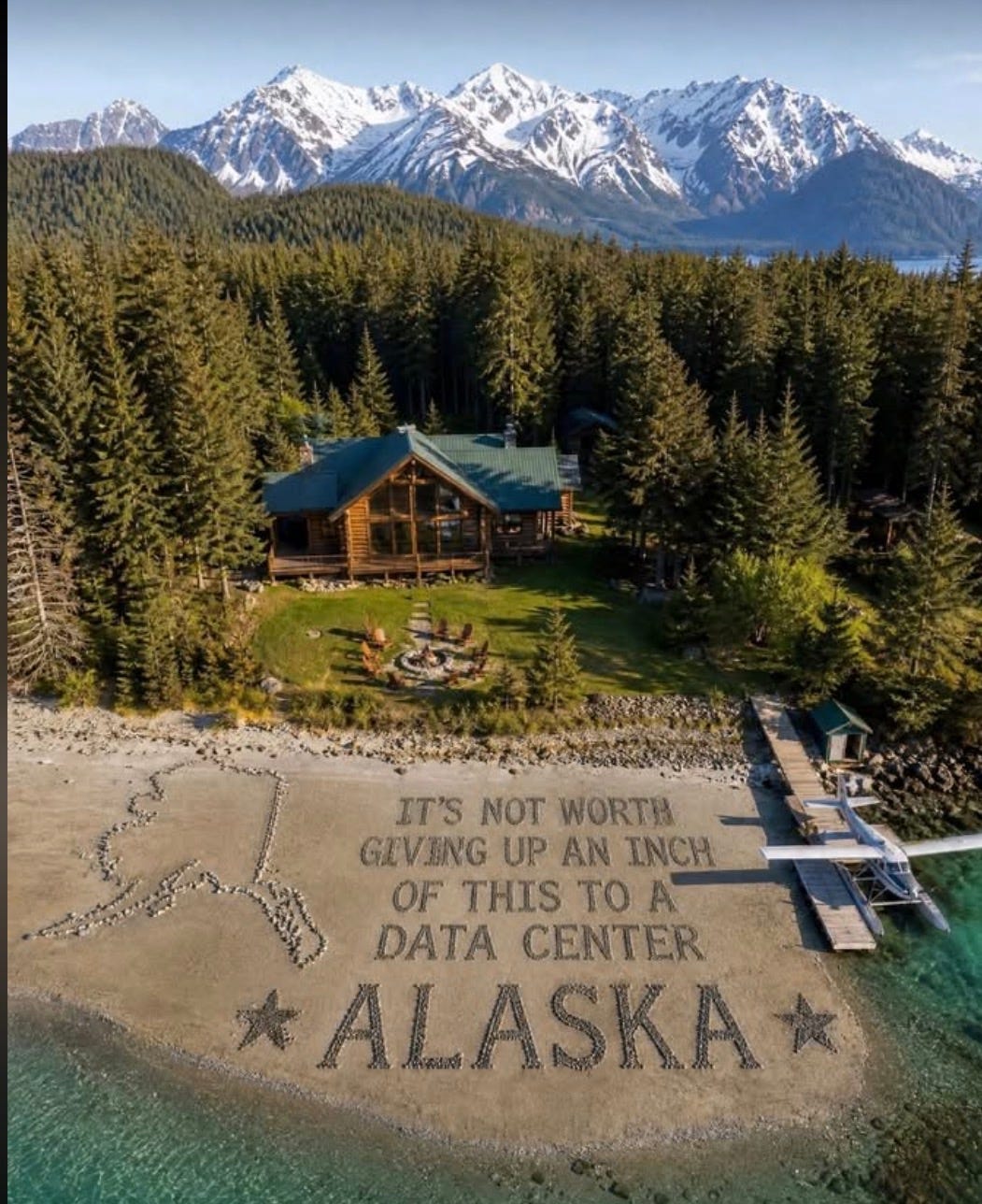
But the script did not originate in Mat-Su. It originated in a national messaging environment amplified by, among others, the same Chinese state media outlets that are silent on the coal-fired turbines powering Beijing’s own AI clusters in Inner Mongolia. The talking points have been polled and refined by organizations whose donor lists include foreign billionaires and entities tied to the Chinese Communist Party. The viral post that brought her to the meeting reached her timeline because an algorithm decided it would, and someone upstream is paying for the engagement.
She is, in Sun Tzu’s terms, the enemy induced to fight on the wrong side without knowing the fight has been arranged. That is the entire point of the doctrine. A skilled strategist does not need spies. He needs only well-meaning people who can be persuaded to take up his cause as their own.
General Billy Mitchell told Congress in 1935 that whoever holds Alaska holds the world. He was making a Sun Tzu claim about position. Alaska sits where the air corridors converge, where the Pacific meets North America, and where the gas, the coal, the hydro, and the cold air for cooling all sit in surplus while the rest of the world runs short.
Beijing knows what Billy Mitchell knew. An American data center buildout grounded in Alaska — powered by Alaska, sited in Alaska — would be nearly impossible to compete with. That is precisely why the campaign has arrived here. Not despite Alaska’s strategic value. Because of it.
Sun Tzu’s doctrine works only against a sleepwalking opponent. The moment the target sees what is being done to him, the doctrine collapses. The activist who realizes whose script she has been reading can put it down. The commissioner who realizes which foreign power benefits from his vote can vote the other way.
Alaska built the pipeline because Alaskans looked at what was in front of them and refused to be talked out of it. The data centers will get built, or not, depending on whether this generation does the same.
Look at what is happening. Name it accurately. And then build anyway.
That is the way home. Build. Build now.
Sources
Sun Tzu, The Art of War — https://classics.mit.edu/Tzu/artwar.html
Bitcoin Policy Institute, “Foreign Influence in the Campaign against American AI” — https://www.btcpolicy.org/articles/foreign-influence-in-the-campaign-against-american-ai
Fox News, “Power the Future sends letter to lawmakers over data” — https://www.foxnews.com/politics/power-future-sends-letter-lawmakers-data
Power the Future, Manufactured Outrage report — https://www.powerthefuture.com/wp-content/uploads/PTF_ManufacturedOutrage_Rev3.pdf
Billy Mitchell on Alaska, UAF Geophysical Institute — https://www.gi.alaska.edu/alaska-science-forum/billy-mitchell-alaska-pioneer