

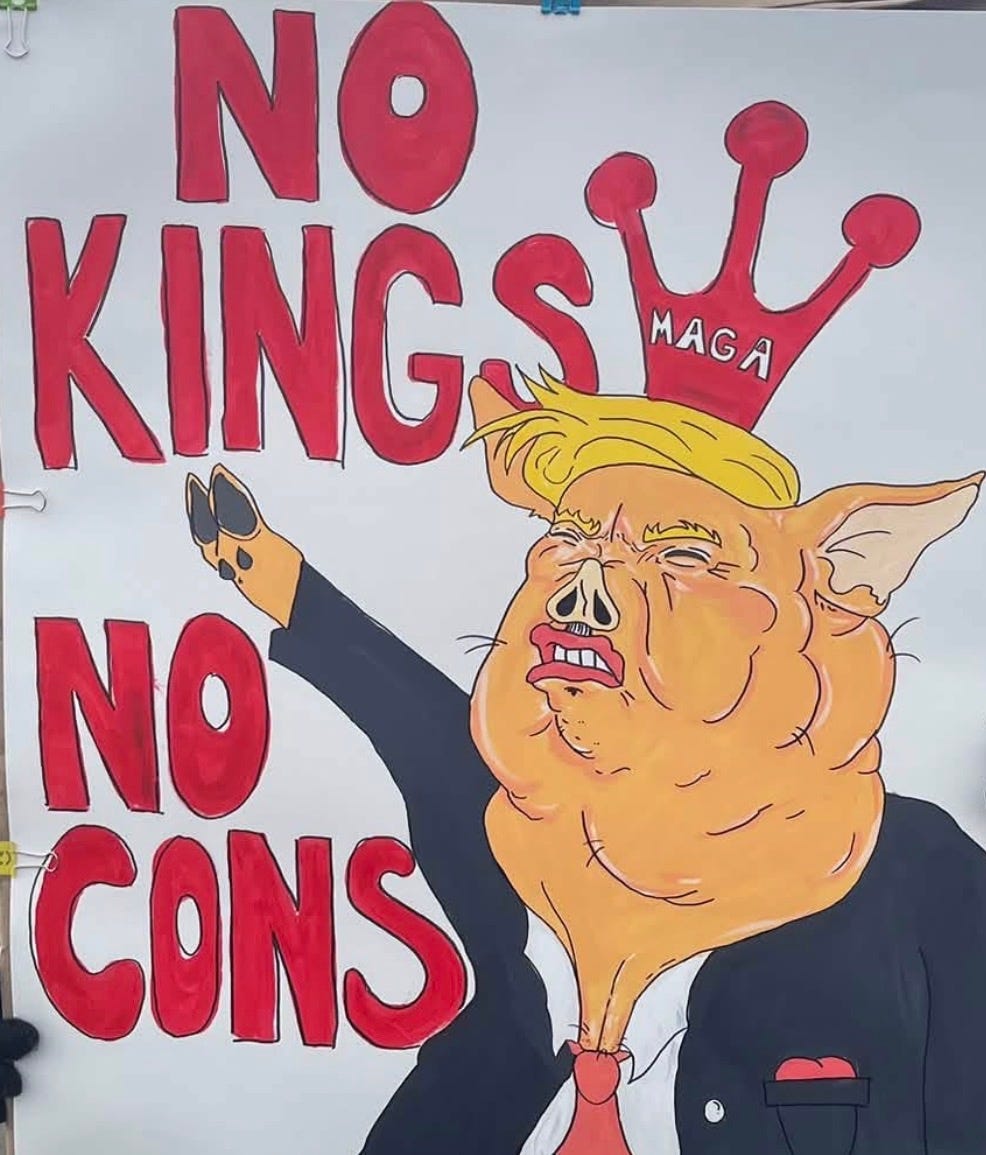
The Founders wouldn’t recognize today’s Republican and Democratic parties, or what we mean by liberal and conservative. George Washington warned against political parties in his Farewell Address. John Adams said he dreaded nothing more than dividing the country into two great parties.
The line they worried about didn’t run from left to right. It ran from tyranny to anarchy, and their job was to build a government that could survive in between.
They knew both ends. They had just fought a king who taxed them without representation, quartered soldiers among them, and dissolved their legislatures. Then, under the Articles of Confederation, Congress couldn’t collect taxes, pay its soldiers, or enforce its own decisions. In 1786, armed farmers led by Daniel Shays shut down courts in Massachusetts. The Constitution was written by men who had seen the dangers of too much government power and too little.
James Madison explained it in Federalist No. 51: “If men were angels, no government would be necessary.” Since they aren’t, government must be strong enough to control the governed and then be obliged to control itself. The first part guards against anarchy. The second guards against tyranny. The primary check, Madison wrote, is “a dependence on the people,” and Federalist No. 52 explains how to keep it: frequent elections, so those in power never forget who they answer to.
The Constitution can be understood as a peace treaty between two views of human nature, an idea Michael Smith develops in a recent essay on his Substack, Unlicensed Punditry. One holds that people can govern themselves through faith, conscience, and personal responsibility. The other trusts institutions, experts, and regulations to keep people in line. Both have a point, and both can go too far. Freedom without responsibility becomes anarchy. Government without limits becomes tyranny. Separation of powers, federalism, and checks and balances were designed to prevent both.
Those who believe in limited government rarely talk about the anarchy end. They should. Liberty never meant doing whatever you want. It meant having enough self-control that nobody else had to control you. As Adams wrote in 1798, “Our Constitution was made only for a moral and religious People. It is wholly inadequate to the government of any other.”

Alaska’s homesteaders understood that. They built roads, schools, and churches, helped their neighbors, and settled their own disputes without waiting on Juneau or Washington. That was self-government, and it worked because people carried their share of the load.
When people stop governing themselves, somebody does it for them. The French Revolution began with promises of liberty and ended with Napoleon crowning himself emperor. People tire of disorder and demand somebody strong enough to end it.
The other end has its own problem. People who don’t trust ordinary folks to run their own lives somehow trust ordinary folks to run everyone else’s, as long as they work for an agency. Spend a session in Juneau and you learn quickly that a state office building doesn’t make anyone wiser. It’s full of good people, and they make the same mistakes the rest of us do.
Nearly 200 years ago, Alexis de Tocqueville warned of a quieter tyranny: a government that slowly takes responsibility away from citizens while promising to care for them. People remain free on paper while administrators make more of their decisions.
Sound familiar?
Personal responsibility works like a muscle. Use it and it gets stronger. Let government do the lifting long enough and it withers, and then that weakness becomes the argument for more government. Heads they win, tails we lose.
The Mat-Su has seen this firsthand. Federal emissions rules require equipment on diesel trucks that can fail in extreme cold, leaving drivers with little engine power. Some local mechanics said they removed those systems because customers needed reliable trucks. The EPA investigated, and federal prosecutors brought charges. Mac Spurlock of Wasilla pleaded guilty to a Clean Air Act violation and received five years of probation.
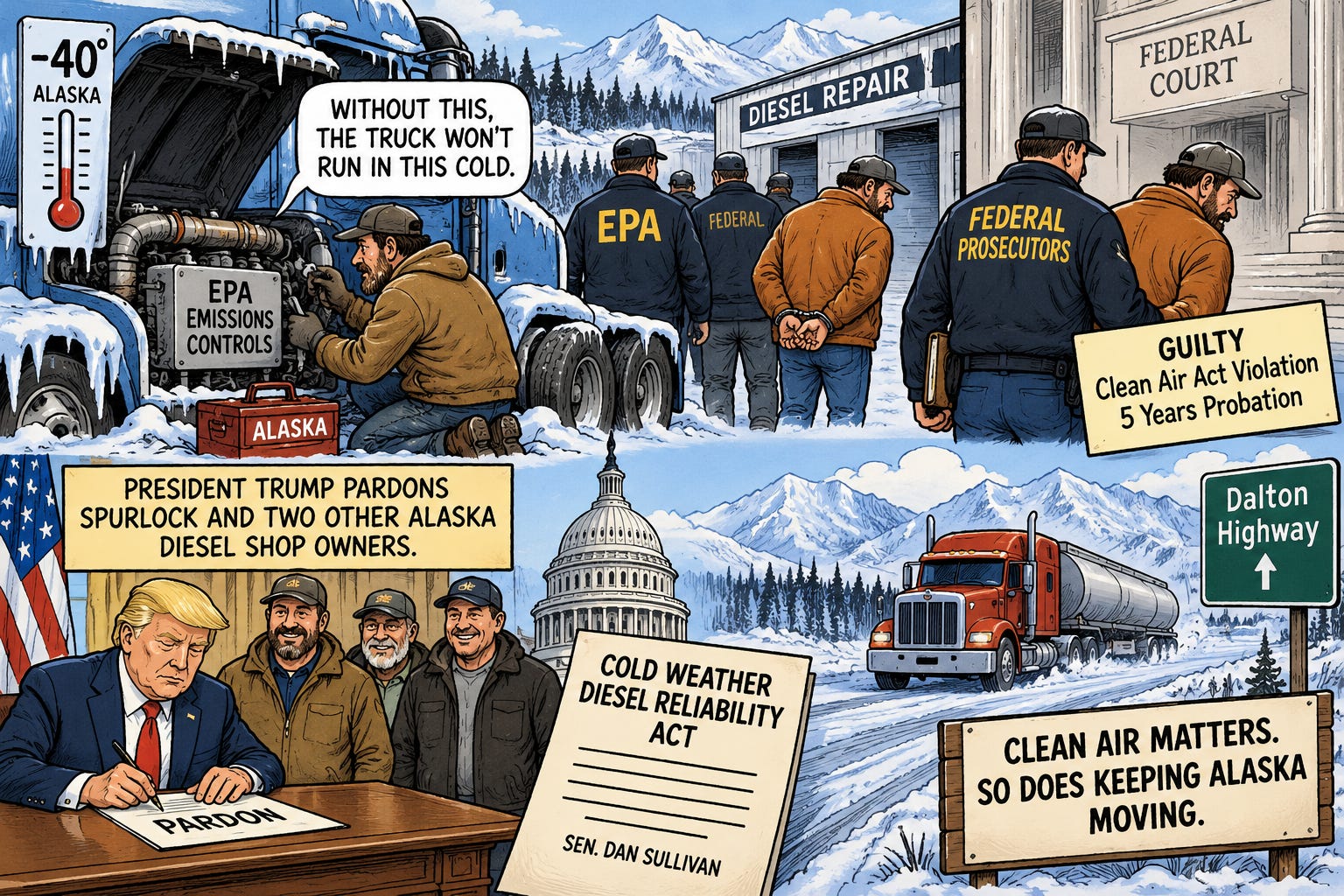
This year, President Trump pardoned Spurlock and two other Alaska diesel shop owners convicted of similar violations. But pardons don’t change the law. Senator Dan Sullivan has been working to pass the Cold Weather Diesel Reliability Act to address the underlying problem.
Clean air matters. So does keeping a truck running on the Dalton Highway at 40 below. When a regulation creates more problems than it solves, the answer shouldn’t always be more enforcement. Sometimes government needs to admit it got something wrong.
None of this makes government the enemy. Courts, defense, roads, and law enforcement are part of what keeps us from sliding toward anarchy. And conservatives aren’t immune to the temptation of power. A government strong enough to force one set of beliefs on everyone can force a different set when the political winds shift.
Both parties complain about executive orders, federal regulations, and judges legislating from the bench, right up until their own side does it. Then it’s leadership.
That’s why the Founders’ line is more useful than left versus right. The first question about any new law shouldn’t be which party supports it. It should be whether it protects liberty or takes it away, and whether it gives government the power it needs without the power it shouldn’t have. That applies even when the proposal comes from our own side.
Today the pressure runs toward tyranny. We’ve grown so used to government telling us what to do that we hardly notice when it takes another piece of our freedom. Failed programs rarely mean less government. They become the excuse for another program, another regulation, and another request for money. Meanwhile families, churches, and communities, the institutions that once taught people to care for themselves and each other, keep getting weaker.
Americans have every right to argue that government should do more and to vote for it. No one, including me, has the right to use government power beyond its constitutional limits to force those ideas on everyone else. Those limits don’t disappear just because our side wins an election.
The Constitution wasn’t written so one side always wins. It was written so nobody wins so much power that the rest of us lose our freedom.
When Benjamin Franklin left the Constitutional Convention, he was asked what kind of government the delegates had created. “A republic,” he answered, “if you can keep it.”
Keeping it takes citizens willing to govern themselves and elected officials willing to live within the limits placed on their power.
The Founders did not hand us a team to root for. They handed us a balance to keep.