


If you’ve followed the news this year, you’ve heard two arguments coming out of Juneau. One says Cook Inlet producers aren’t doing enough to keep Southcentral Alaska supplied with natural gas. The other says those same producers should pay a new 9.4 percent state income tax.
What you may not have noticed is that both arguments come from the same corner of the Capitol. For years, some of the loudest voices demanding that the “Texas billionaire” pay more in taxes have also demanded that his company drill more wells in Cook Inlet.
Those two positions cannot both be good policy. Can Alaska demand more gas from Cook Inlet while raising the cost of producing it?
In June 2023, Sen. Bill Wielechowski wrote state officials arguing that Cook Inlet’s biggest producer had failed to meet its obligation to explore and develop the basin and suggested the company could face litigation. In August 2024, he joined Sen. Cathy Giessel in asking the Federal Trade Commission to investigate that same company, after earlier letters urging Alaska’s Attorney General to do the same. Whether through committee hearings, public letters, or interviews with the press, the message never changed. The companies operating in Cook Inlet should be doing more.
The State looked into it. The Department of Natural Resources answered that after more than a decade of monitoring, it is confident Hilcorp is meeting its lease obligations, and it warned against inviting federal regulators to second-guess Alaska.
In 2023, Sen. Wielechowski introduced legislation extending Alaska’s corporate income tax to privately held S corporations that do not pay it today. By every account, it was aimed at the very producer he wanted drilling more wells. That bill failed. In 2024, he inserted the same language into the Governor’s carbon storage bill. That failed too. This session, a stand-alone S corporation tax bill has been sitting in the Senate Rules Committee for more than a year. Instead of moving that bill on its own merits, the Senate attached the tax to the gasline tax restructuring bill, the one piece of legislation Alaska needs most. That decision has already consumed two special sessions, drawn a veto threat from the Governor, and triggered a third special session. As the Senate passed it in June, Sen. Wielechowski’s parting words to House members who objected were, “Go ahead. Vote for the Texas billionaire.”
When the conference committee report on HB 381 came to the House floor with the S corporation tax attached and no opportunity to amend it, I voted no. It was one of the most disappointing votes I’ve cast in the Legislature, not because I doubted the project, but because attaching a major tax policy to the gasline bill changed what members were being asked to vote on. The Senate could not decide what it wanted more, the pipeline or the tax, and it was willing to put the pipeline at risk to get the income tax. Alaskans should never have to watch their energy future used as a bargaining chip.
Hilcorp, the basin’s largest producer, has been investing between $400 million and $500 million a year in Cook Inlet. Two land rigs drilled through the winter. The Spartan 151 jack-up rig returned offshore after breakup. Crews are drilling from the Tyonek Platform right now. Since coming to Alaska, Hilcorp has invested nearly $30 billion in our state.
Still, Cook Inlet is a mature basin where every new well is harder and more expensive than the last. The people doing that work are not executives sitting in Houston. They are welders, drillers, mechanics, crane operators, engineers, vessel crews, and thousands of other Alaskans whose jobs depend on continued investment.
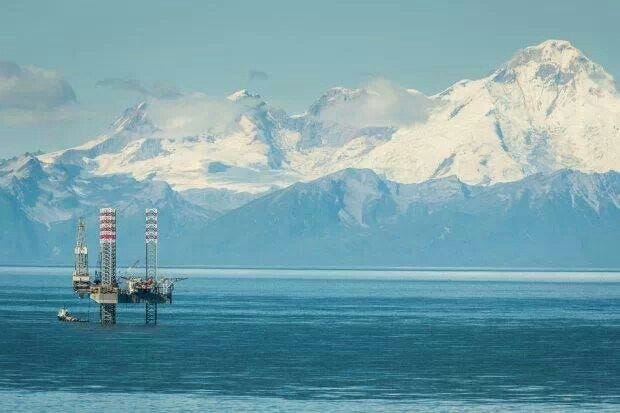
Here is the part many in Juneau ignore. Cook Inlet is a thin-margin play. After Hilcorp was once again the only bidder in the State’s 2024 Cook Inlet lease sale, the Commissioner of the Department of Natural Resources acknowledged that the lack of competition reflected the basin’s difficult economics. Only one company stayed in the game, and now we’re talking about thanking that company with a new income tax.
Hilcorp also has a choice about where it invests its next dollar. The company operates on the North Slope, where geology is different and returns are generally stronger. Capital goes where the numbers work. Raise the cost of drilling in a thin-margin basin, and you don’t get more wells. You get fewer wells, less gas, imported LNG, and higher utility bills for the very ratepayers Juneau says it wants to protect. The gas will still get produced somewhere. It just won’t be here, where Southcentral Alaska needs it.
The conference committee report on HB 381 included a carve-out exempting Cook Inlet gas producers from the very tax being imposed on everyone else. That tells me the tax’s own supporters recognize the conflict they have created.
If the tax would not discourage Cook Inlet production, no exemption would be needed. If it would discourage production, and the carve-out says it would, then years of demanding more drilling while pushing this tax were never a coherent energy policy. Those two positions simply cannot be reconciled.
The challenge in Cook Inlet is geology and economics, not a lack of effort.
If our priority is keeping the Railbelt supplied with affordable natural gas, then we must pass a clean gasline tax restructuring bill while keeping investment conditions stable in Cook Inlet.
If the Legislature wants to debate the S corporation tax, let’s do it honestly in the stand-alone bill already waiting in committee, during the regular session, and out in the open.
Those two debates simply should not be tied together.
Alaska needs more gas. Juneau needs to get out of the way.