

The Math Always Wins
I’ve been thinking about something that doesn’t get enough attention in Alaska.
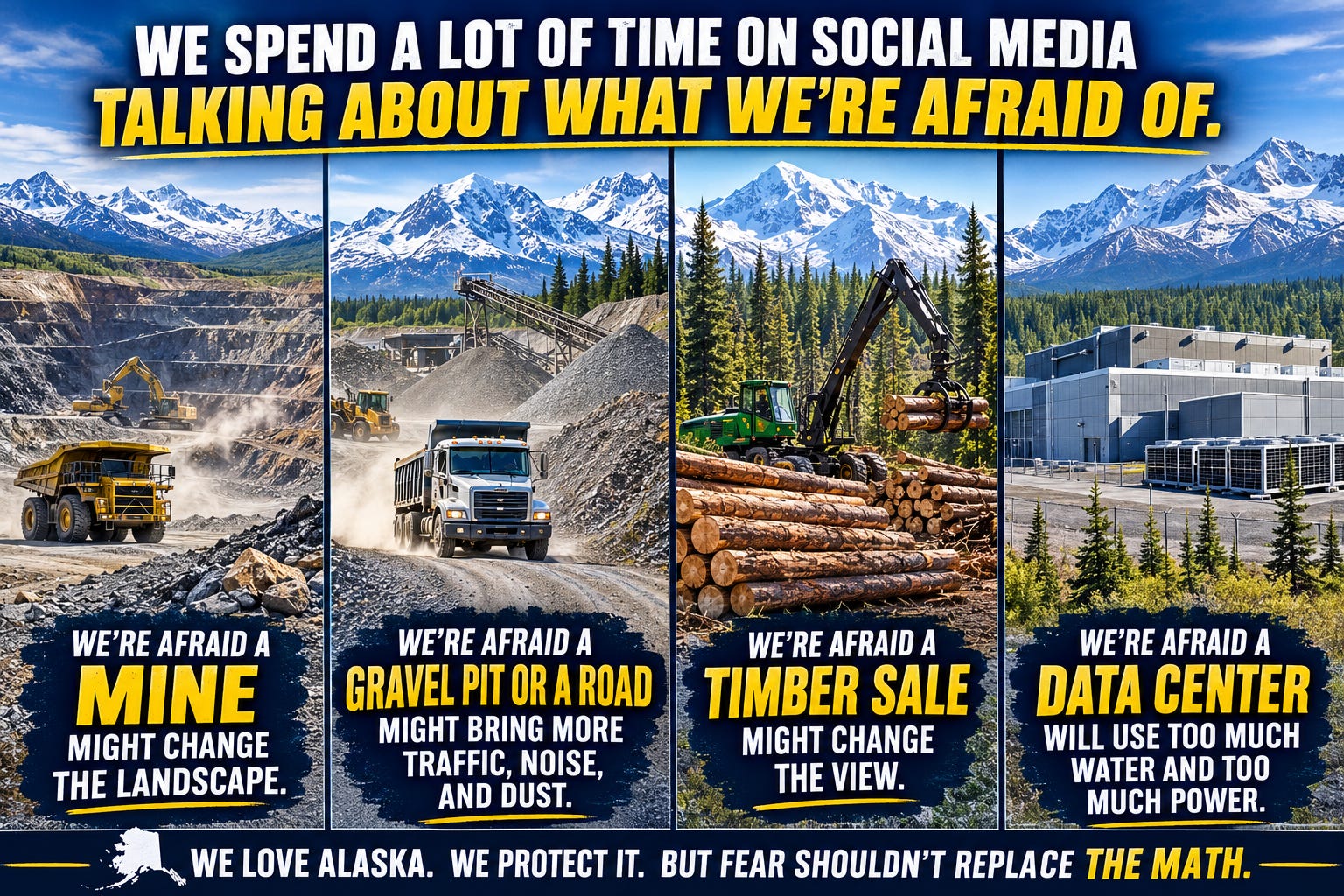
We spend a lot of time on social media talking about what we’re afraid of. We’re afraid a mine might change the landscape. We’re afraid a gravel pit or a road might bring more traffic, noise, and dust. We’re afraid a timber sale might change the view. We’re afraid a data center will use too much water and too much power.
Too many public comments boil down to one sentence: “No, because…”
Fear has its place. It makes us ask hard questions. But fear is not an economic policy. Fear only tells us what not to do. It never tells us what we should do. At some point the numbers still have to work, and right now those numbers are one of the reasons people keep leaving Alaska.
Every week we discuss one problem at a time. Electric bills. Housing. Schools, troopers, roads, ferries, the Permanent Fund Dividend. We argue each issue as though it stands alone.
But every one of those problems comes back to the same thing.
The math.
Right now, a family in Anchorage is paying about $4.36 a gallon for heating oil. The average electric bill is around $591 a month, and electricity costs about 27 percent more than the national average. A median house runs roughly $410,000 to $428,000. That isn’t just expensive. It’s the kind of math that makes families sit around the kitchen table and ask whether they can afford to stay.
In Fairbanks, some small businesses spend 25 to 30 percent of their revenue just keeping the lights on before they pay a single employee. In many rural communities, electricity costs 55 cents a kilowatt-hour, and in some villages more than $1.30. That’s thirty-five times the national average. Those aren’t just numbers on a utility bill. They’re why families leave, businesses close, and employers can’t find people willing to stay.
Then we all wonder why Alaska keeps losing families and our schools keep losing kids.
Those aren’t separate problems.
They’re all part of the same equation.
The first warning should have been obvious. In 2016, Alaska stopped paying the full statutory Permanent Fund Dividend. We haven’t paid a full one since. That wasn’t just about the dividend. It was the first sign that the state’s math no longer worked.
Most Alaskans want the same things. Their full dividend. The Parks Highway fixed instead of patched. The Talkeetna Trooper Post reopened. A fire and EMS station in Willow. Good schools, a strong university, safe communities, reliable ferries. Beautiful parks and modern senior centers in Meadow Lakes. I don’t know many people who disagree with any of that.
Most Alaskans are also pretty clear about what they don’t want. No state income tax. No statewide sales tax. No higher borough property taxes or fuel taxes. I understand that because I don’t want those things either.
That’s where the conversation usually stops.
We’ve become very good at asking, “What if this project goes wrong?” That’s a fair question, and we should ask it. But we almost never ask the other one.
What if saying no goes wrong?
What if it means another young family packs up and leaves? Another small business closes? Another school gets smaller? Another generation decides its future is somewhere else?
Those are consequences too, and they deserve to be part of the conversation.
So let’s ask the question nobody seems to want to answer.
If we’re not going to raise taxes, where does the money come from? Not where we’d like it to come from. Where does it actually come from?
For years we’ve said no to one major project after another. Susitna-Watana. New mining. Roads to resources. Timber sales. Oil and gas. Now data centers and gravel pits. Every one deserves a careful review, and some deserve to be rejected. That’s not my point.
My point is simple.
If the answer to a project is no, then something else has to be yes.
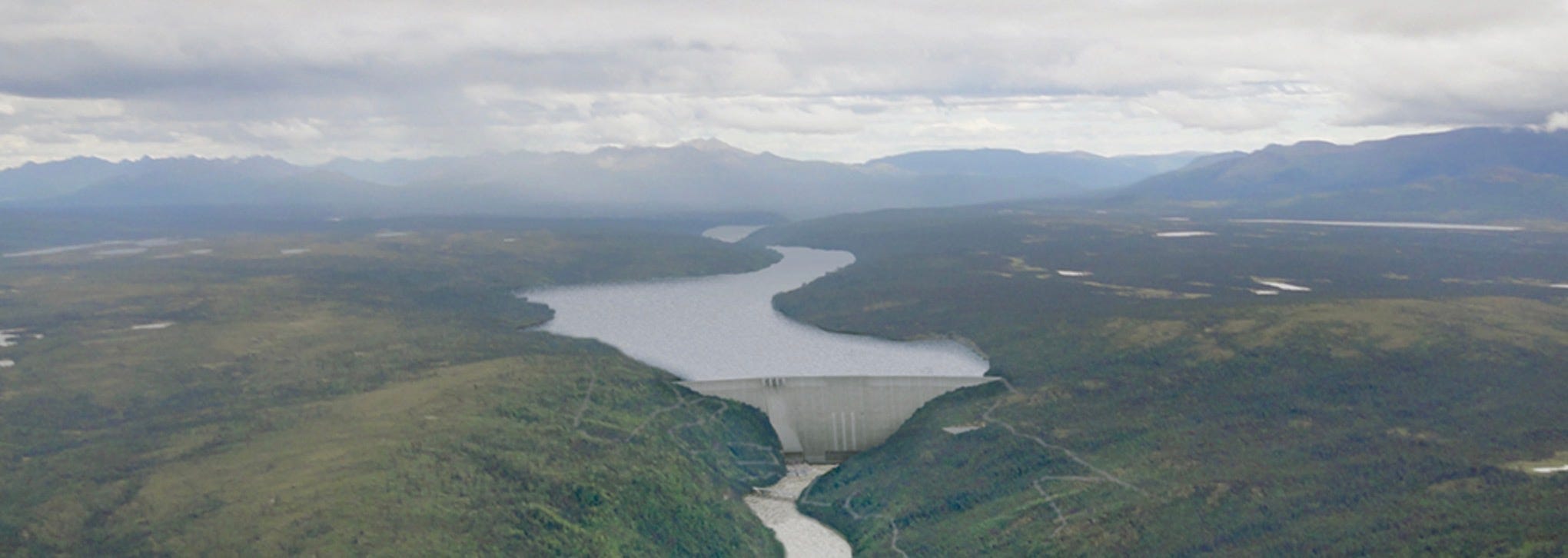
Take Susitna-Watana. Many of the same people who celebrated stopping that project now complain about the price of electricity. Yet it was expected to produce power for less than ten cents a kilowatt-hour for generations. We rejected one of the largest sources of low-cost power Alaska has ever considered.
That was a choice.
Every choice has consequences.
The same thing is happening in rural Alaska. More than 150 communities still rely on diesel generators. Families pay utility bills that would be hard to imagine anywhere else in America. Small businesses struggle. Teachers think twice about taking a job. Young families pack up and leave.
Every form of economic activity has impacts. A mine changes the landscape. A timber sale changes a forest. Roads bring traffic. Data centers use electricity. A pipeline is not all that pretty. Tourism brings crowds. Gravel pits bring noise and dust.
Those are the impacts we spend most of our time talking about.
We almost never talk about the math of saying no.
Fewer jobs. A smaller tax base. Higher costs spread across fewer people. Young families moving away. Schools shrinking. Communities slowly emptying out.
There has never been an economy without consequences. The real question isn’t whether there will be impacts. It’s which impacts we’re willing to live with.
Some people accuse me of being personally invested in projects like data centers. I’m not. I live off the grid. My electric bill isn’t driving this. I’m trying to figure out how we pay for the things Alaskans keep telling me they want without coming back to them for more taxes.
If the answer is no to data centers, no to new mines, no to more timber, no to oil, gas, and pipelines, and no to roads that open new opportunities, then tell us what replaces them. How do we pay a full Permanent Fund Dividend? Rebuild the Parks Highway? Reopen the Talkeetna Trooper Post? Build the Willow fire station? Make it possible for young families to stay in Alaska without asking everyone else to pay higher taxes?
If the answer is simply no, then tell us what the yes is. Tell us how you pay for the services Alaskans expect. Tell us how you keep young families here. Tell us how you make Alaska affordable again.
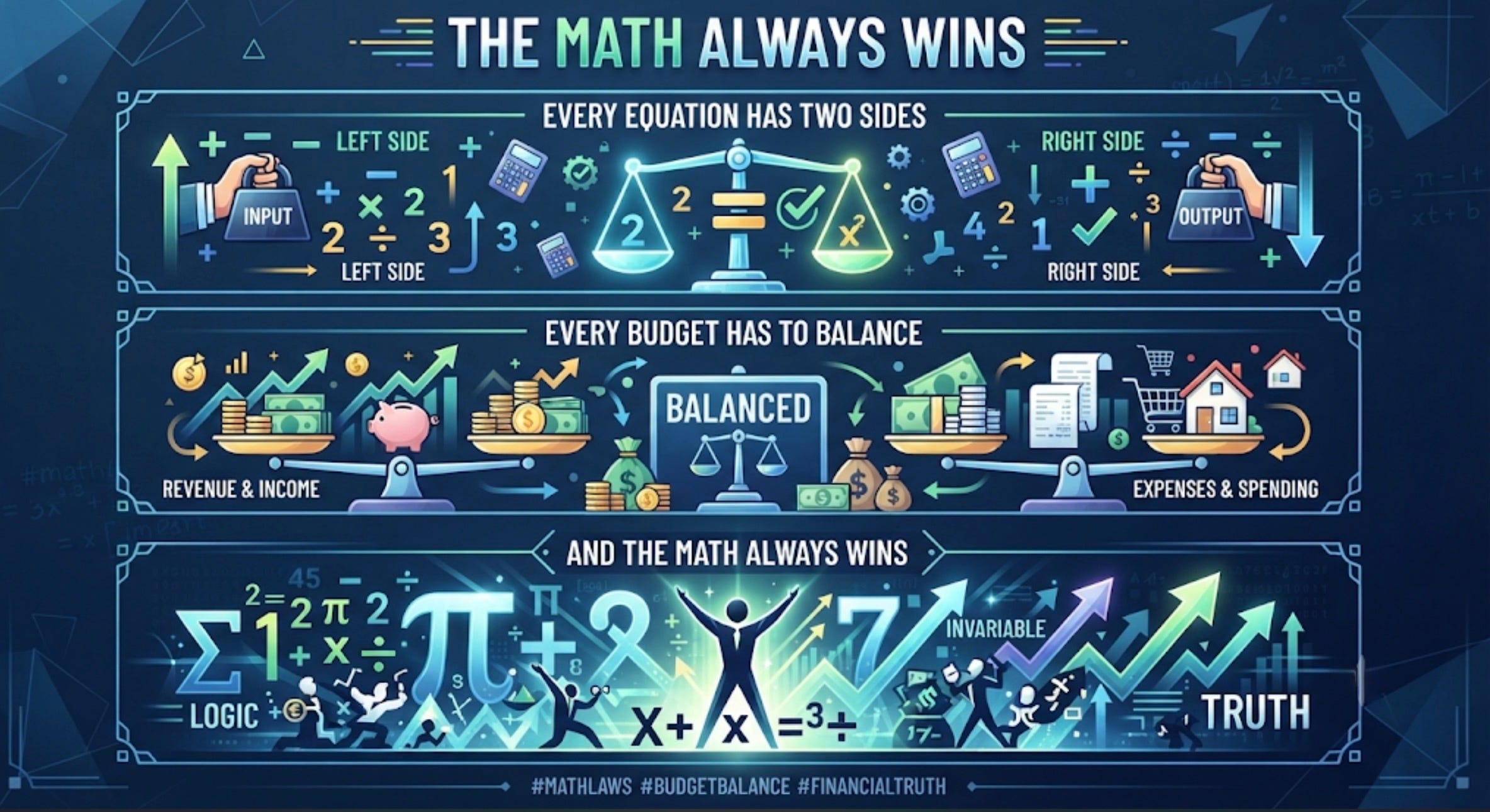
Every equation has two sides, and every budget has to balance.
And the math always wins.