

In April I wrote about the digital whirlpool of manufactured outrage surrounding Alaska development projects. A couple of days ago I argued in The Country That Builds Wins that many of these campaigns are part of a larger strategic competition with China.
Today it is simpler. It is about how often this country forgets its own history.
Americans have a habit of panicking whenever a major new technology arrives. The pattern is old and remarkably consistent. First comes fear. Then comes the moral argument wrapped around the fear. Then comes the political movement demanding restrictions, delays, or outright prohibition. A few decades later the technology becomes ordinary, indispensable, and eventually invisible. By then the country has forgotten the panic ever happened and moves on to repeating the cycle all over again.
Thomas Edison helped pioneer the model.
When George Westinghouse began expanding alternating current systems in the 1880s, Edison immediately understood the threat. Direct current could not efficiently transmit electricity long distances. Alternating current could. That meant the market was about to move away from Edison’s system along with the enormous financial value tied to his patents and investments.
Edison did not frame the fight as a business dispute. He framed it as a public safety emergency.
He staged demonstrations electrocuting animals with alternating current to convince the public the technology was inherently deadly. He branded Westinghouse’s system “the executioner’s current” and even coined a new verb for it. Convicted criminals, he predicted, would be “Westinghoused.” He backed the use of AC in the electric chair because he wanted Americans associating Westinghouse’s system with death. Newspapers amplified the panic. Politicians demanded restrictions. Ordinary citizens became convinced electrification itself might be dangerous.
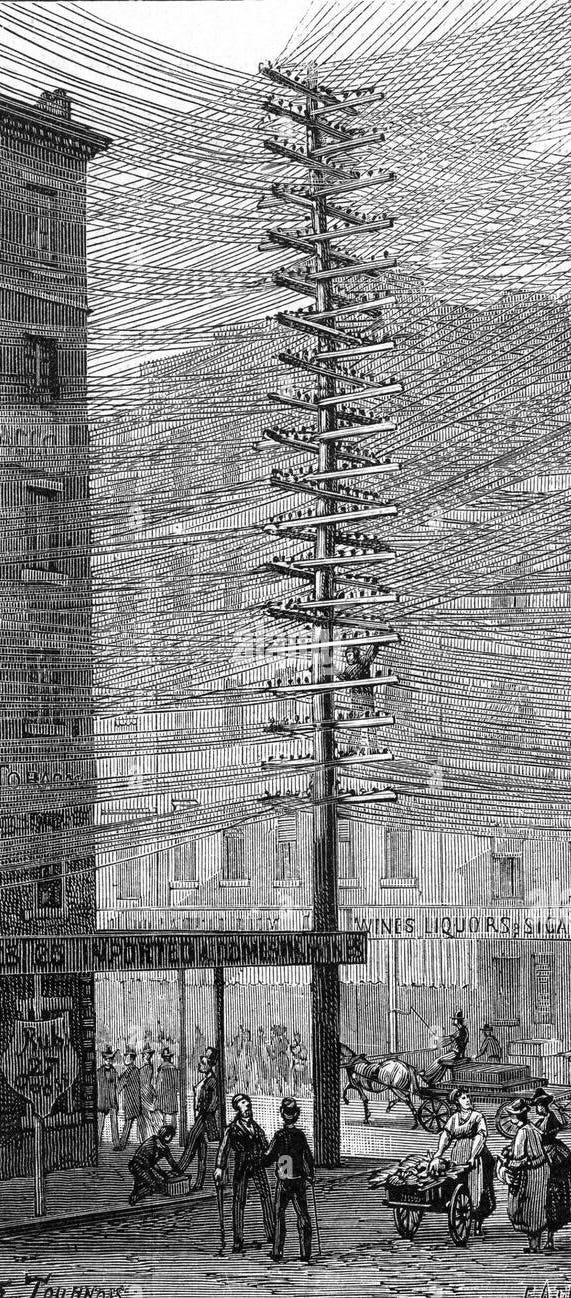
Some of the concern was understandable. Early electrical systems were crude by modern standards. Fatal accidents did happen. But the broader conclusion, that the technology itself posed an unacceptable threat to society, proved completely wrong.
America standardized around alternating current because it worked better. The country industrialized around it. Every home in the nation now depends on the same system people once feared would kill them in their sleep.
The automobile produced almost the exact same reaction.
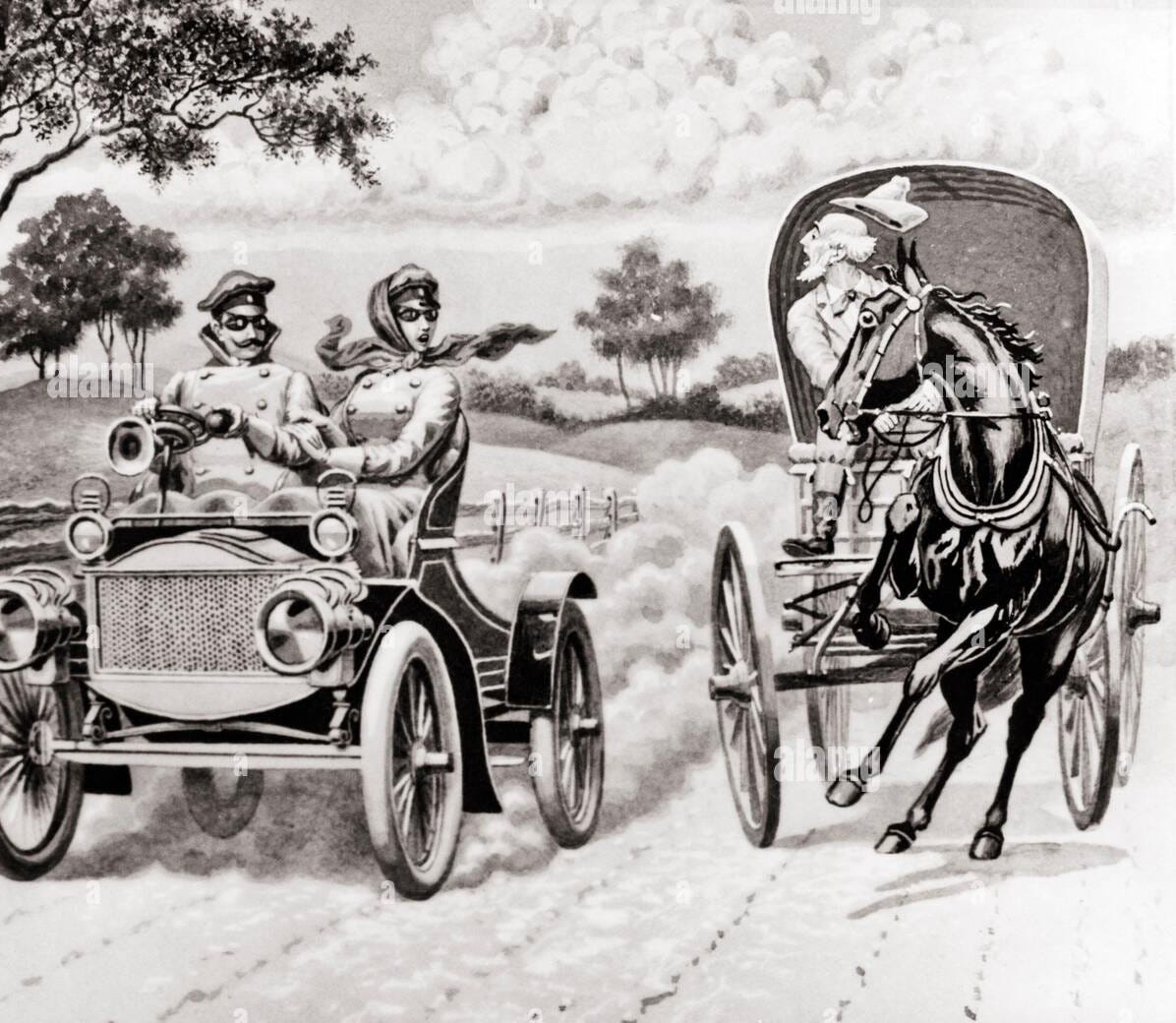
In both Britain and parts of the United States, lawmakers imposed rules specifically designed to slow adoption. Vermont required self-propelled vehicles to be preceded by a man walking ahead to warn others of the danger. Britain’s Red Flag Act imposed similar requirements and crippling speed limits.

Again, the arguments sounded reasonable at the time. Early automobiles were loud, unreliable, and dangerous. Roads were primitive. Horses were easily startled.
But underneath the public safety language sat another reality. Railroads, carriage operators, and other existing industries faced a technology that threatened their business models. Restrictive laws protected incumbents by slowing competition.
The panic eventually collapsed under the weight of reality. Automobiles transformed commerce, transportation, manufacturing, and daily life. The same society that once demanded warning flags in front of cars later built interstate highways across the continent.

The telephone triggered many of the same fears. Critics warned it would destroy face-to-face relationships, spread disease, undermine parental authority, and expose households to fraud and moral corruption. Some churches openly opposed installation. Newspapers warned about strangers gaining direct access into the home.
Some of those concerns were legitimate. Fraud existed. Privacy concerns existed. Social behavior changed.
But the larger fear completely missed where the country was heading. The telephone became essential infrastructure within a generation.
At some point the pattern becomes impossible to ignore.

Every major infrastructure or communications breakthrough in American history has produced the same combination of public anxiety, political opposition, and entrenched interests benefiting from delay. We still hear about cell phones and brain cancer. Electricity, automobiles, aviation, telecommunications, computing, and the internet all moved through the same cycle. The details changed. Human nature did not.
That matters because we are watching the same process unfold again around energy infrastructure, industrial expansion, and artificial intelligence systems.
The modern debate sounds different on the surface, but structurally it is almost identical to the earlier panics. People raise concerns about energy consumption, land use, environmental impact, and social disruption. Some concerns are legitimate. Every major industrial transition carries tradeoffs.
But legitimate concerns are not the same thing as understanding where the future is headed.
The real question is not whether transformative technologies create disruption. They always do. The real question is whether a society chooses to shape that technology while moving forward, or whether fear and political paralysis push development somewhere else.
Places that stop building usually do not stay prosperous very long.
Alaska understands this better than most places in the country. The generation that built modern Alaska did not build it by retreating from infrastructure fights. They built the pipeline despite national opposition campaigns. They supported resource development despite lawsuits, protests, and political pressure. They understood that economic strength usually flows toward the places willing to build difficult things.
Alaska still has the advantages most of the world wishes it had. We have land, energy potential, strategic geography, ports, resources, and generations of industrial experience. We have the ability to support large-scale power generation, data centers, transmission systems, mining, LNG infrastructure, and heavy industry if we decide we actually want to compete for them.
Projects like the Terra Energy Center, Port MacKenzie expansion, North Slope development, transmission infrastructure, and industrial power generation are not isolated fights. Together they represent a decision about whether Alaska intends to remain economically relevant in the next industrial cycle.
The people opposing every major project usually describe themselves as protecting Alaska’s future. Similar people once made the same arguments against electrification, automobiles, pipelines, aviation, and nearly every other transformative system that later became essential to modern life.
The regions that build emerging infrastructure tend to accumulate wealth, jobs, leverage, and political influence. The regions that trap themselves in endless opposition campaigns usually watch those benefits migrate elsewhere.
We have seen this before many times. America almost always moves forward eventually. The only real question is which states lead the transition and which ones spend years falling behind while others build around them.
Alaska cannot afford to spend the next decade pretending the future can be stopped by procedural obstruction and local panic campaigns.
The countries and states that continue building are the ones that shape what comes next.
We need to build. In Alaska. Now.
Kevin J. McCabe writes from Alaska. This is the third essay in a series. The first, The Digital Whirlpool of Manufactured Outrage, examined how coordinated online campaigns shape public perception of Alaska development projects. The second, The Country That Builds Wins, placed those campaigns inside the larger cold war competition between the United States and the People’s Republic of China.
Sources
War of the Currents and Edison’s anti-AC campaign, Smithsonian Magazine — https://www.smithsonianmag.com/history/edison-vs-westinghouse-a-shocking-rivalry-102146036/
War of the Currents, History.com — https://www.history.com/articles/what-was-the-war-of-the-currents
Red flag traffic laws, Wikipedia — https://en.wikipedia.org/wiki/Red_flag_traffic_laws
Locomotive Acts, Wikipedia — https://en.wikipedia.org/wiki/Locomotive_Acts