

Carbon capture and storage is often talked about in Alaska like it’s some brand-new experiment. It’s not. It is also talked about as if it is the first step toward total carbon control. That is not the case either. Commercial projects have been operating reliably for nearly thirty years.
The first major offshore storage project started in 1996 at the Sleipner CO2 Storage Project. There, CO₂ separated from natural gas has been injected into a deep saline formation for decades, with no verified releases.
Since then, technology has grown steadily. Today, dozens of large-scale facilities operate worldwide, capturing roughly fifty to sixty million metric tons of CO₂ each year. Hundreds more are under construction or in development as industries look for ways to reduce emissions while continuing to produce the energy, cement, steel, and materials the world depends on.
Let me be clear. The amount of money being poured into climate change mitigation irritates me as much as anyone. But here is the reality we face in Alaska. I do not like Guinness beer or loud diesel trucks either, but if someone wants to build a brewery or a diesel truck plant here that creates jobs and pays taxes, I will support it. I am not a fan of the recreational drug industry either, yet Alaskans voted to legalize marijuana, so we regulate it, collect the revenue, and support the jobs. Carbon capture falls into the same category. Whether you agree with the politics behind it or not, it represents a real economic opportunity Alaska should take seriously.
The main question most people ask is simple. Does the CO₂ actually stay underground? The record says it largely does.
Projects such as the Snøhvit CO2 Storage Project, the Quest Carbon Capture and Storage Project, and the Gorgon Carbon Capture and Storage Project have injected millions of tons into deep formations with no verified releases to the surface or atmosphere. Monitoring systems track pressure, plume movement, well integrity, and the caprock seal.
There have been operational issues, as with any large industrial system. At the In Salah Carbon Capture and Storage Project, injection was suspended after monitoring detected pressure changes and ground movement that raised concerns about the caprock. The project shut down before any confirmed leak occurred. That is exactly how these systems are supposed to function.
In the United States, the most talked-about incident occurred at the Illinois Industrial Carbon Capture and Storage Project operated by Archer Daniels Midland. In 2024 regulators identified corrosion in a monitoring well that allowed CO₂ to migrate into an unintended underground zone. Injection was paused, the issue was corrected, and there was no surface release, no groundwater impact, and no harm to public health.
It is important to separate these cases from unrelated events. The CO₂ pipeline rupture in Satartia, Mississippi in 2020 involved transported gas, not underground storage. The disaster at Lake Nyos in 1986 came from a natural volcanic reservoir, not an engineered site.

CO₂ used for storage is injected deep underground where pressure keeps it in a dense, stable, near liquid state. It is held beneath impermeable caprock, often in the same types of formations that trapped oil and gas for millions of years.
People also ask how dangerous CO₂ is if it leaks. Carbon dioxide is not toxic like many industrial chemicals. It is a natural part of the air we breathe and the air we exhale. The primary risk at high concentrations is oxygen displacement.
At normal outdoor levels, around 400 parts per million, CO₂ is harmless. Standards set by the Occupational Safety and Health Administration allow up to 5,000 parts per million over an eight-hour workday. Health effects occur at much higher concentrations. Because CO₂ is heavier than air, large releases can collect in low areas, though in open environments it disperses quickly.
There have been claims circulating that multiple dangerous leaks have occurred from storage sites. I have not found credible evidence to support those claims. The documented cases are the ones outlined here. After nearly thirty years and tens of millions of tons injected, confirmed leaks from properly designed and monitored reservoirs remain extremely rare.
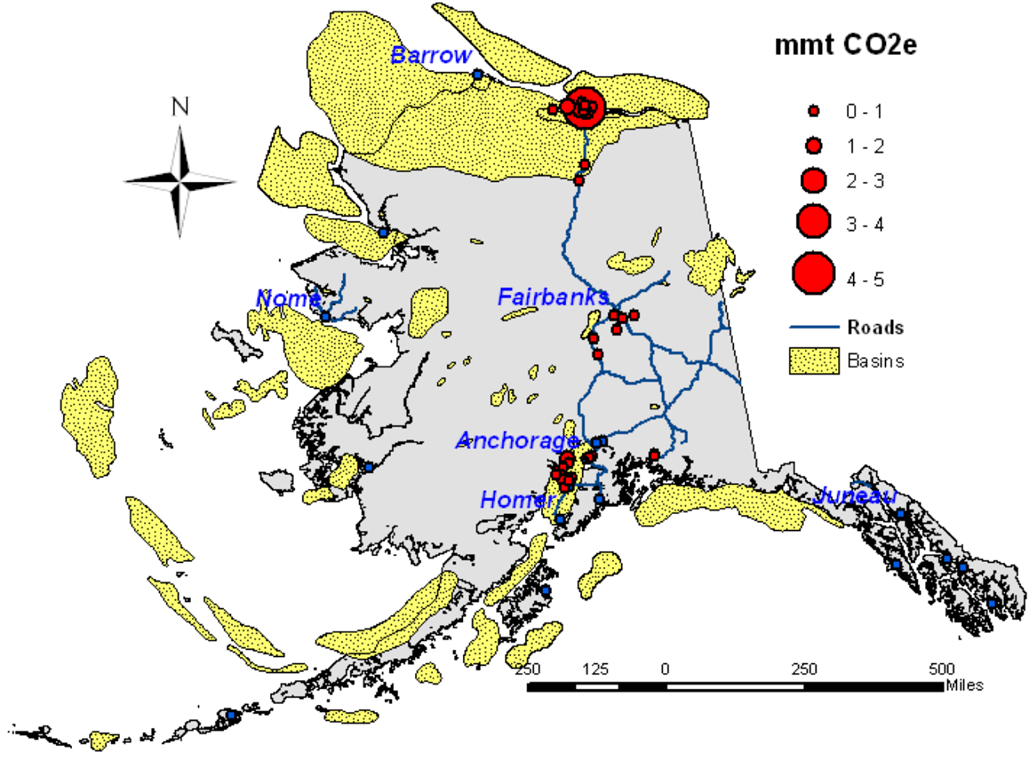
For Alaska, this matters. Decades of oil and gas development have given us some of the best subsurface knowledge anywhere. The same formations that held hydrocarbons for millions of years can likely store carbon dioxide safely. Alaska should also pursue Class VI well primacy so decisions can be made here at home, not delayed in Washington, D.C.

If carbon capture becomes a larger part of the global energy system, Alaska has the geology, workforce, and experience to do it responsibly and to keep the benefits here at home.
Consistency is the hob-goblin of small minds. It is time to get over the fear, investigate what projects actually do, and say “yes -but” instead of “No -because.”
It’s time to get over our fear.
Originally published on Substack: https://kevinjmccabe.substack.com/p/alaskas-smart-play-on-carbon-storage