

A few months ago I wrote about the idea of building a hemp insulation plant at Port MacKenzie in Alaska. The response was overwhelmingly positive, and it reinforced something I’ve been saying for years: Alaskans are ready to start building things again. Not just studying projects, holding meetings, and commissioning reports, but actually building industries that create jobs, produce goods, stop outmigration of our children, and generate wealth here at home.
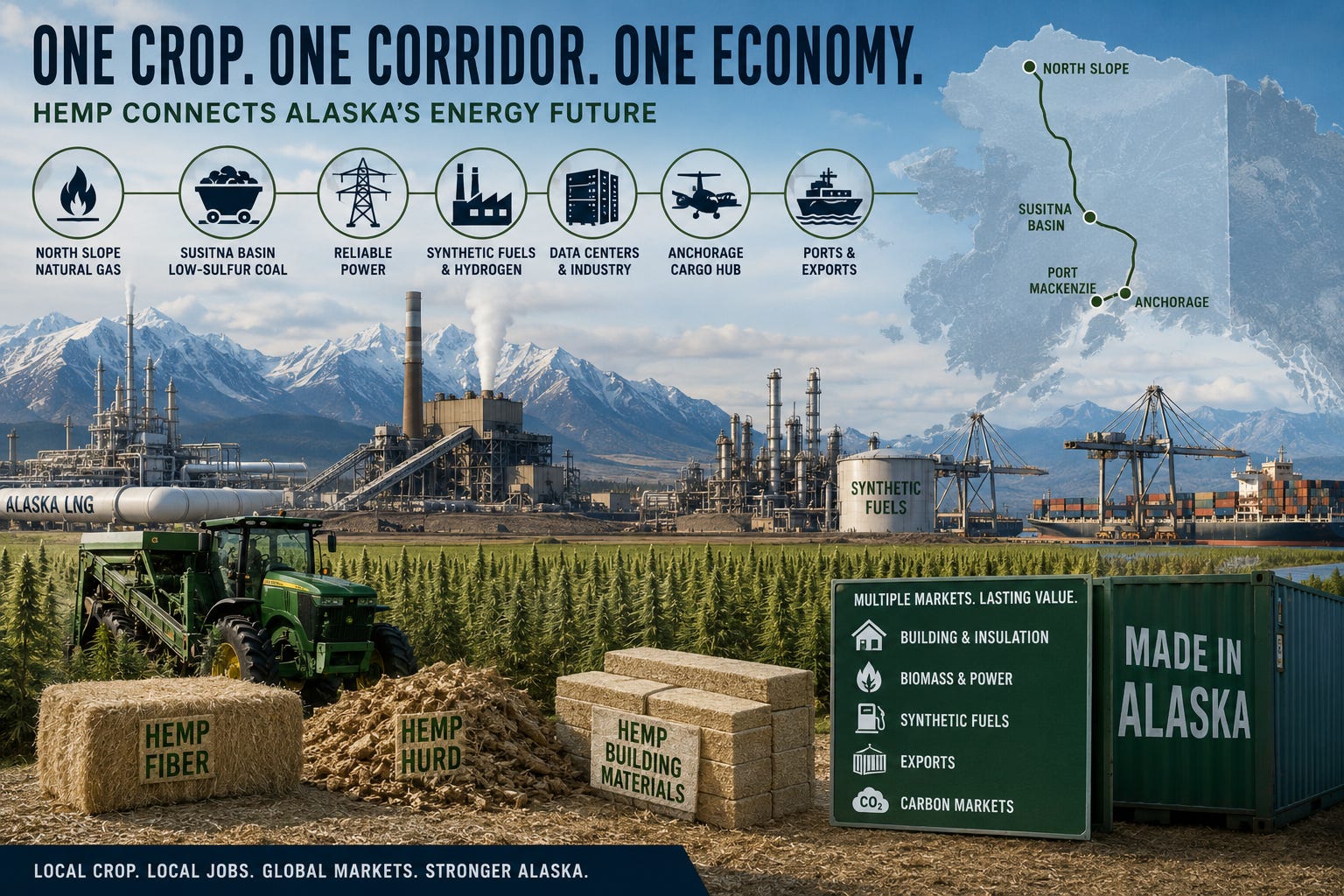
The more I thought about it, the more I realized hemp might be far more important than most people think. Not because hemp alone will transform Alaska’s economy, but because it could become an industry that naturally connects several of the biggest opportunities sitting in front of us right now.
Southcentral Alaska is approaching an energy crossroads whether we like it or not. Cook Inlet gas production is declining, and every serious discussion about the future eventually lands on the same set of possibilities: North Slope gas through Alaska LNG, new power generation in the Susitna region, synthetic fuel production tied to Anchorage’s role as one of the world’s busiest cargo airports, and the prospect of large industrial users such as data centers looking for reliable power. Most people debate these projects one at a time, as if they exist in separate worlds.
I think that’s the wrong way to look at them.
History shows that successful economies are rarely built around a single project. They are built around systems. Railroads created markets. Ports created industries. Pipelines created manufacturing opportunities. Infrastructure came first, investment followed, and entire regions grew around the connections. That’s why I keep coming back to the Upper Cook Inlet region. Within a relatively compact geography, Alaska already has the ingredients for something much larger than any individual project.
To the north sit enormous energy resources, including North Slope natural gas and roughly a quarter-billion tons of low-sulfur coal in the Susitna Basin. The Mat-Su provides available land, transportation access, and room for industrial expansion. South Central Alaska offers workforce, fuel infrastructure, and access to international markets through one of the most important cargo airports on the planet, where carriers uplift close to a billion gallons of jet fuel every year. Port MacKenzie sits in the middle with deep-water access, industrial zoning, and room to grow. Viewed separately, these are individual assets. Viewed together, they begin to look like the framework of a new industrial economy.
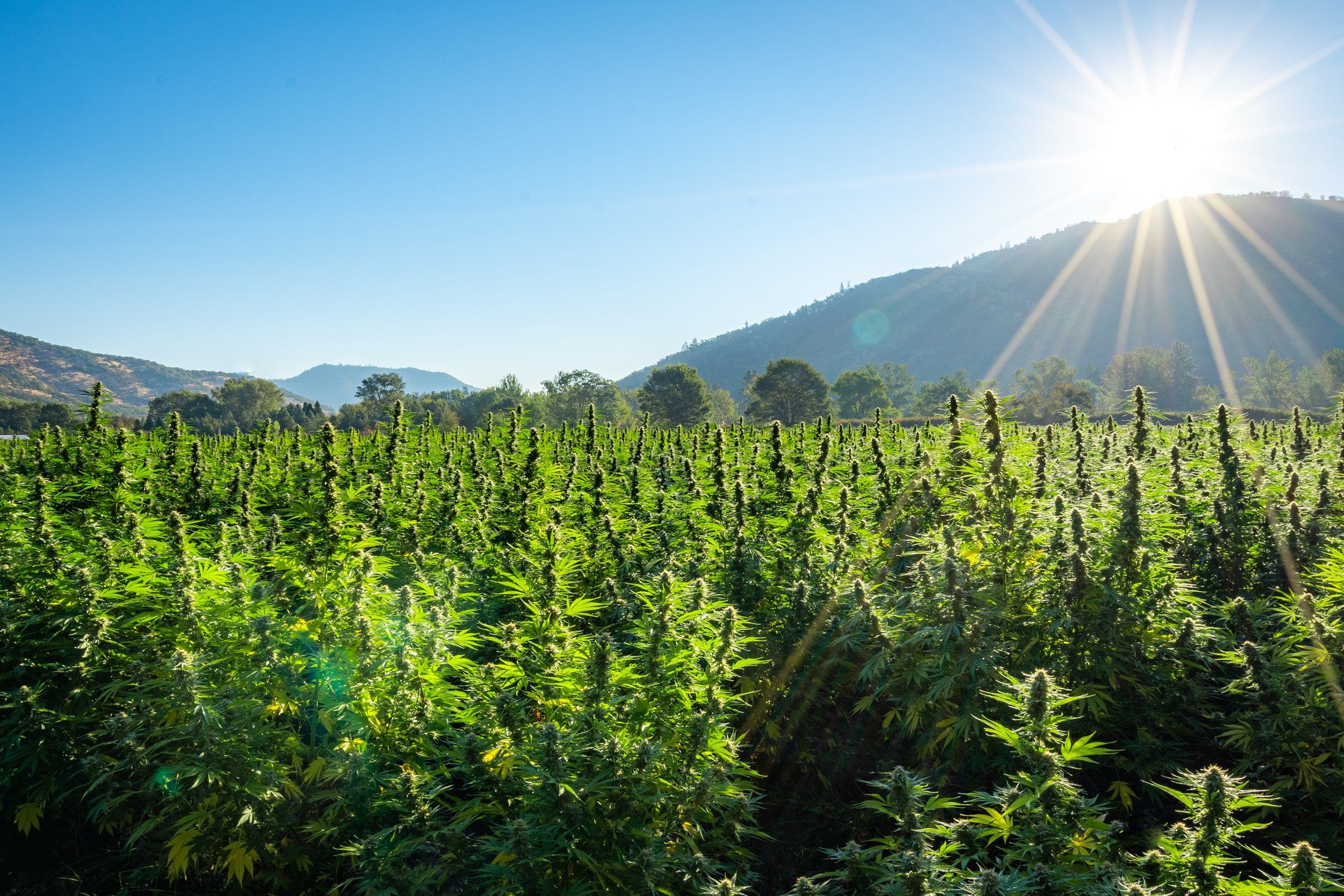
That is where hemp enters the picture. Industrial hemp is not marijuana. It is a fiber crop with applications ranging from insulation and construction materials to textiles, composites, food products, and biomass. It grows fast and consumes four times more CO2 than a tree. It is one of the few pieces of this larger puzzle that can move immediately. A gasline takes years. A power plant takes years. A refinery takes years. A farmer can plant hemp in May and bale it by September. That makes hemp fundamentally different from the other opportunities we spend so much time talking about.
The economics start with the fiber itself. Processed hemp fiber is a valuable product with growing markets both inside and outside Alaska. For years I’ve pointed out that nearly 60 percent of the containers leaving Alaska go back empty after bringing products north. Hemp gives us something to put in those containers. Instead of exporting air, we begin exporting value-added products grown, processed, and manufactured in Alaska. That means jobs on the farm, jobs in processing, jobs in transportation, and jobs in manufacturing.
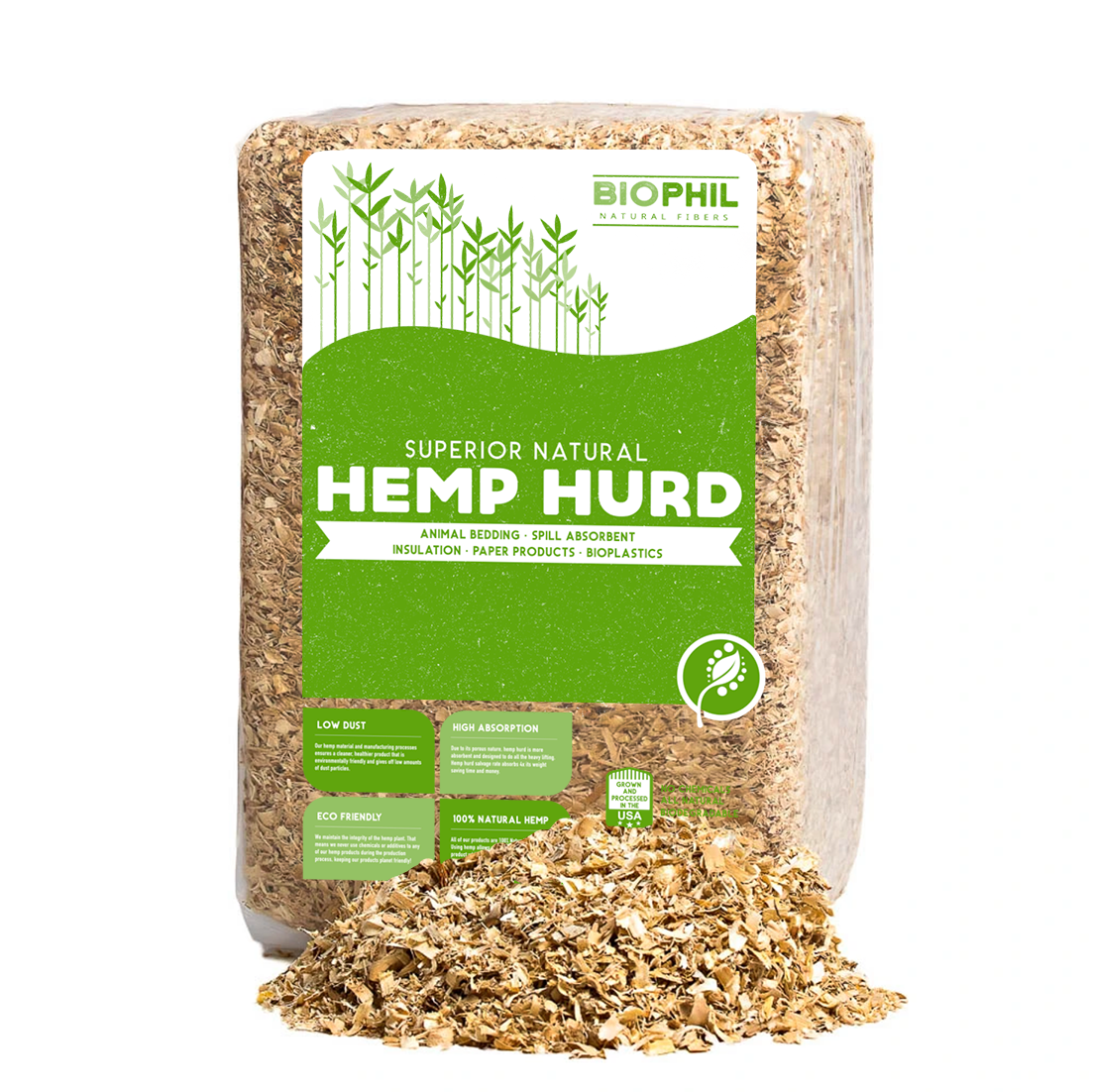
The real opportunity, however, may be in the part of the plant many people overlook. Hemp processing produces a large volume of woody core material known as hurd. In some places hurd becomes a waste problem. In Alaska it could become another commodity. It can be used in hempcrete and insulation products designed specifically for northern climates. It can serve as a biomass feedstock. It can potentially support future industrial processes that develop alongside Alaska’s expanding energy sector.
And whether you believe in carbon markets or think they’re a Washington-created distortion, the reality is they exist. Hemp pulls carbon out of the atmosphere while it grows, and that gives it value in markets that increasingly reward carbon removal. Alaska can either take advantage of those incentives or watch other states collect them.
The important point is that multiple markets create resilience. Farmers are not dependent on one customer, processors are not dependent on one product, and the economics improve with every additional use.
The same principle applies to the larger industrial system developing around Upper Cook Inlet. Alaska LNG provides energy and feedstock. New power generation provides reliable electricity. Synthetic fuel production creates manufacturing opportunities tied directly to global transportation networks. Data centers create long-term demand that helps justify investment in generation and transmission infrastructure. Each piece strengthens the others, and hemp fits naturally into the middle of that picture because it participates in multiple markets at the same time.
That is why I don’t view hemp as merely an agricultural crop. I view it as valuable economic infrastructure. It creates productive activity that supports transportation networks, manufacturing, energy development, and export opportunities all at once. It gives Alaska something we rarely have enough of: a practical industry that can start small, scale over time, and benefit regardless of which larger projects ultimately move forward.
Will every one of these projects happen exactly as proposed? Probably not. Some will change, some will be delayed, and some may never happen. But that uncertainty is exactly why hemp deserves attention. It is the lowest-cost opportunity on the board and the fastest to develop. If Alaska LNG moves forward, hemp benefits. If new power generation comes online, hemp benefits. If synthetic fuel production expands, hemp benefits. And if one of those projects stumbles, hemp still stands on its own merits as a source of construction materials, fiber products, and manufactured goods.
The foundation already exists. The resources are here. The transportation network is here. The markets are here. What Alaska needs now is the discipline to stop viewing every opportunity as a separate political battle and start thinking about how these pieces fit together.
Hemp is the glue that fastens these mega-projects together.
The future of Alaska’s economy will not be built by a single project. It will be built by transportation infrastructure, reliable energy, working lands, and industries that reinforce one another. The gasline, the power generation, the fuel production, the port, the rail connection, and the farms are not competing visions of Alaska’s future. They are pieces of the same system.
Hemp is simply one of the few pieces we can start building today.