

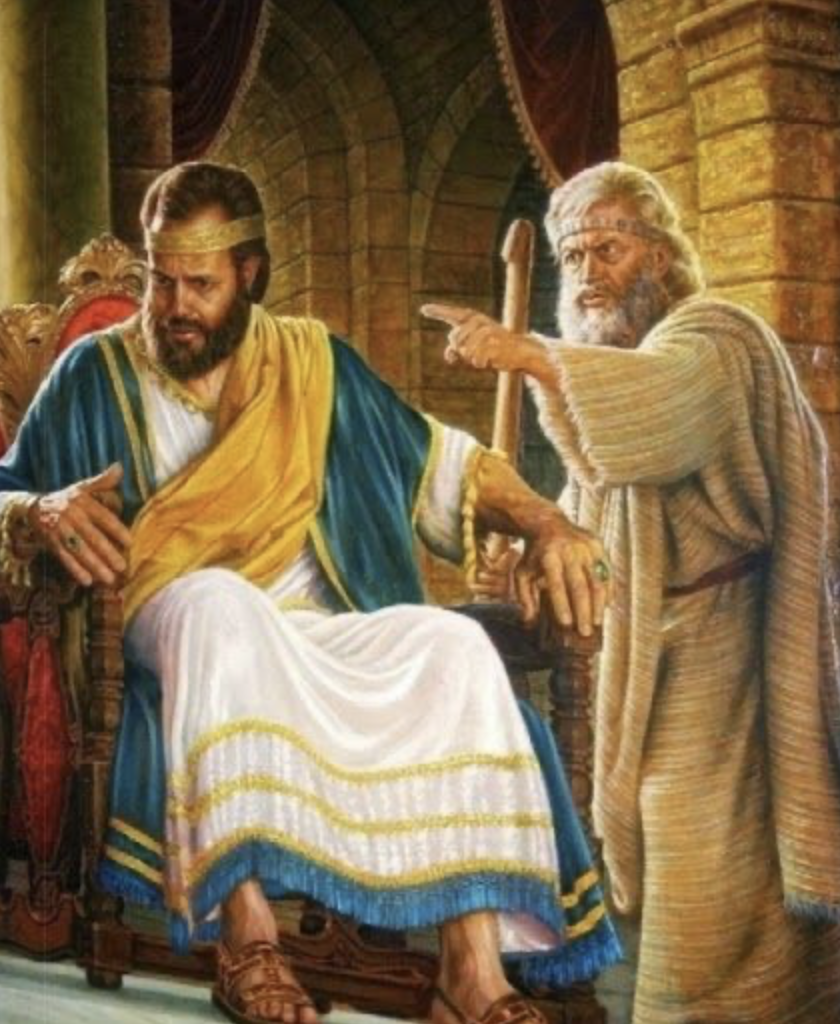
In 2 Samuel 12, the prophet Nathan confronts King David with a story that leaves no room for escape. David had committed adultery with Bathsheba and arranged the death of her husband, Uriah. Nathan listens to David’s judgment of the story and then delivers the truth plainly: “You are the man.” There is no hedging and no concern for comfort. The wrongdoing is named directly and publicly.
What matters just as much is what follows. David does not argue, deflect, or blame anyone else. He does not question Nathan’s motives or minimize his actions. He says, “I have sinned against the Lord.” That moment of ownership opens the door to forgiveness. Consequences remain, but redemption is real, and David’s legacy endures as a man after God’s own heart. Accountability did not stop at exposure. It pointed the way back.
As is often the case, that Biblical lesson applies directly to Alaska conservative politics today. Calling out bad decisions is necessary. When Republican leaders drift from limited government, fiscal restraint, responsible resource development, or personal liberty, someone has to speak up. Outside pressure from an External Motivating Force (EMF) absolutely matters. It can shift the Overton Window and remind elected officials why they ran as Republicans in the first place. Silence helps no one.
But accountability that offers no path forward stops being accountability. It becomes counterproductive and, over time, destructive.
We see the same pattern repeated. A freshman legislator sponsors a bill that looks like government overreach. Grassroots groups push back. The message lands. The sponsorship is withdrawn. That should be a success story. Conservative voters spoke and the legislator listened and corrected course. Or a more senior legislator supports a budget that shorts the full Permanent Fund Dividend. An explanation follows and a possible mistake is acknowledged, yet vicious personal attacks persist.

Instead of redemption, the attacks often continue long after the issue is resolved. The initial mistake is treated as unforgivable. The correction is framed as weakness rather than responsibility and a “label” once given never seems to be removed. At that point, we are no longer enforcing standards. We are punishing repentance. The result is predictable. Legislators retreat, dig in, or seek cover in broader coalitions that dilute conservative influence rather than strengthen it. Are we driving (potential) legislators away from us?
This habit is one of the main reasons Republicans continue to struggle to attract Alaska’s large undeclared and nonpartisan voter bloc. Nearly sixty percent of Alaskans do not belong to any political party. Many of them agree with us on the fundamentals: energy jobs, gun rights, living within our means, and standing up to federal overreach. What drives them away is not conservative policy. It is constant infighting, bickering, and performative outrage. These voters are looking for leadership competence, steadiness, and results. When our internal accountability feels vindictive instead of constructive, it does not project strength. It looks like dysfunction, and they vote accordingly.
There is a better way forward, and it starts with truth.

Before any accountability begins, there must be an honest evaluation of the facts. Was the claim about a legislator’s vote or position actually true, or was it exaggerated, mischaracterized, or shaded by political opponents looking to manufacture an EMF to damage someone they already opposed? Accountability only works, and is only necessary, when it is grounded in verified facts. Not rumors. Not hearsay. Not narratives that collapse under scrutiny. Without truth, accountability becomes a weapon rather than a corrective. Republicans succeed when we insist on honesty, transparency, and clarity, not when we bend facts to fit a moment.
From there, expectations must be clear and shared. Accountability should be tied directly to the Alaska GOP platform and to district priorities. Legislators should know exactly what standards they are being held to and why those standards matter. Fair rules applied consistently build credibility. Moving goalposts destroy it.
Pushback should come from within the legislator’s district and remain focused on substance. The people’s voices must carry more weight than outside attacks. Persuasion works better than personal destruction. When a legislator listens and adjusts course, that should be acknowledged publicly. Saying “thank you for listening, now let’s move forward together” reinforces good behavior and strengthens trust. This could even start with party and district leaders modeling it through resolutions that celebrate course corrections, trainings that teach constructive advocacy, and scorecards that track progress toward principles.
Accountability should also lead to results. Redemption must be paired with action. That means co-sponsoring pro-development legislation, protecting life, protecting the Permanent Fund Dividend, and rolling back unnecessary regulation. Voters need to see that conservative principles translate into real outcomes, not endless internal warfare.
Most of all, we must model firmness alongside grace. Juneau is a complicated place, especially for new legislators. Mistakes will happen. A political culture that treats honest course correction as strength rather than surrender encourages leaders to lean right without fear of permanent exile. That is how you build a durable conservative majority instead of shrinking it.
This approach does not weaken accountability. It strengthens it. By offering a path to redemption, conservatives build trust with independents, expand the base, and maintain pressure to move the Overton Window in the right direction. Nathan confronted David without hesitation, but he also left room for repentance and restoration. In politics, as in scripture, redemption is not weakness. It is the foundation of lasting strength and effective governance for Alaska’s future
Originally published on Substack: https://kevinjmccabe.substack.com/p/a-path-to-redemption