

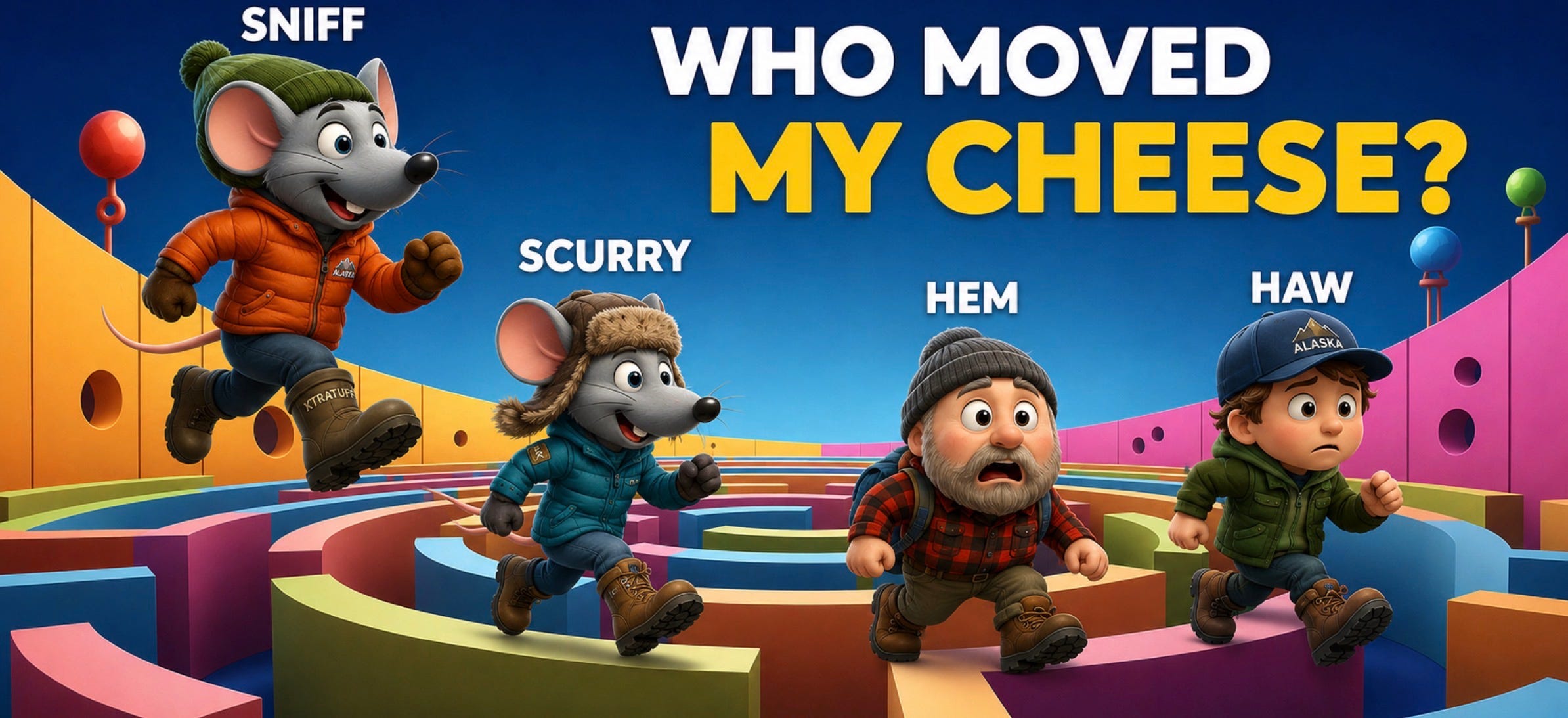
Most people have heard of the little book Who Moved My Cheese? by Spencer Johnson. It’s short enough to read in an afternoon. The story is about four characters who depend on a pile of cheese. One day they discover it’s gone.
Two of them don’t waste time arguing with reality. They pull on their boots and go looking for new cheese.
The other two don’t.
One becomes angry. He blames everyone else for moving the cheese. He insists things should go back to the way they were. Instead of searching for what comes next, he stays beside the empty shelf, convinced someone will eventually bring the old cheese back.
It’s a simple story.
But it describes something very real.
Recently, Michael Smith, an American Thinker and essayist, wrote a piece called The Living Years. He wasn’t writing about cheese. He was writing about politics. In one paragraph, Smith argued that too much of today’s politics is driven by spite. He wasn’t talking about ordinary political disagreement or honest differences over policy. He was describing something more destructive. Spite is being so determined to stop someone else from finding the cheese that you’re willing to hurt yourself if it means they don’t get what they want.
Whether you agree with Smith or not, his essay made me think about Alaska.
In Alaska, the cheese has moved more than once. Oil production has declined. Timber markets have changed. Cook Inlet gas is running short. The easy money that built much of modern Alaska is not as easy as it once was. Whether we like it or not, the cheese moved.
Most sourdoughs would pull on their boots and go looking for new cheese.
Somewhere along the way, Alaskans developed a different habit.
Every time someone points toward a new piece of cheese, whether it’s a gas line, a mine, a timber sale, a road, a data center, or a new power project, the pattern begins all over again. The first response is opposition. Then comes the demand for more planning. A task force. Another review. Another permit. Another public process. Another special session and another reason to wait.
Planning is important. Every major project ought to be tested, challenged, and improved before it is built. But there comes a point where planning stops being about making a better decision and becomes a way to avoid making one. Endless planning slowly turns into endless delay.
Eventually the investors move on, the opportunity disappears, or the economics no longer work. The search for the cheese dies, not because someone proved it was impossible, but because we never stopped studying it long enough to decide.

Then comes the regret.
A few years later we wonder why our energy costs keep climbing. We wonder why the Permanent Fund Dividend keeps shrinking while our energy costs keep rising. We wonder why our roads aren’t getting fixed, why schools need more money, why young families are leaving Alaska, and why someone else built the jobs we thought we had time to debate.
Then another opportunity comes along, and the whole cycle starts over again.
I’m not saying every project should be approved. I’ve voted against projects before, and I’ll do it again when I believe they’re wrong for Alaska. Some deserve to fail. Some simply aren’t worth building.
But there is a question that has to be answered every time we say no.
What’s the replacement? What’s the plan?
If this isn’t the new cheese, where do we find it? If we’re going to reject one source of jobs, investment, and future revenue, what takes its place? Schools still have to be funded. Troopers still have to be paid. Roads still have to be maintained. The budget still shows up every January.
That is why Smith’s essay struck a nerve with me. I don’t think every opponent of development is motivated by spite. Many sincerely believe they’re protecting Alaska, and I respect that. But the pattern sometimes looks like spite because we don’t just refuse to accept that the cheese moved. And we oppose every effort to go find new cheese.
Then we regret being hungry.
The old cheese isn’t coming back. We can keep arguing with reality, which doesn’t give a crap about us, or we can pull on our boots and go find the next one.