

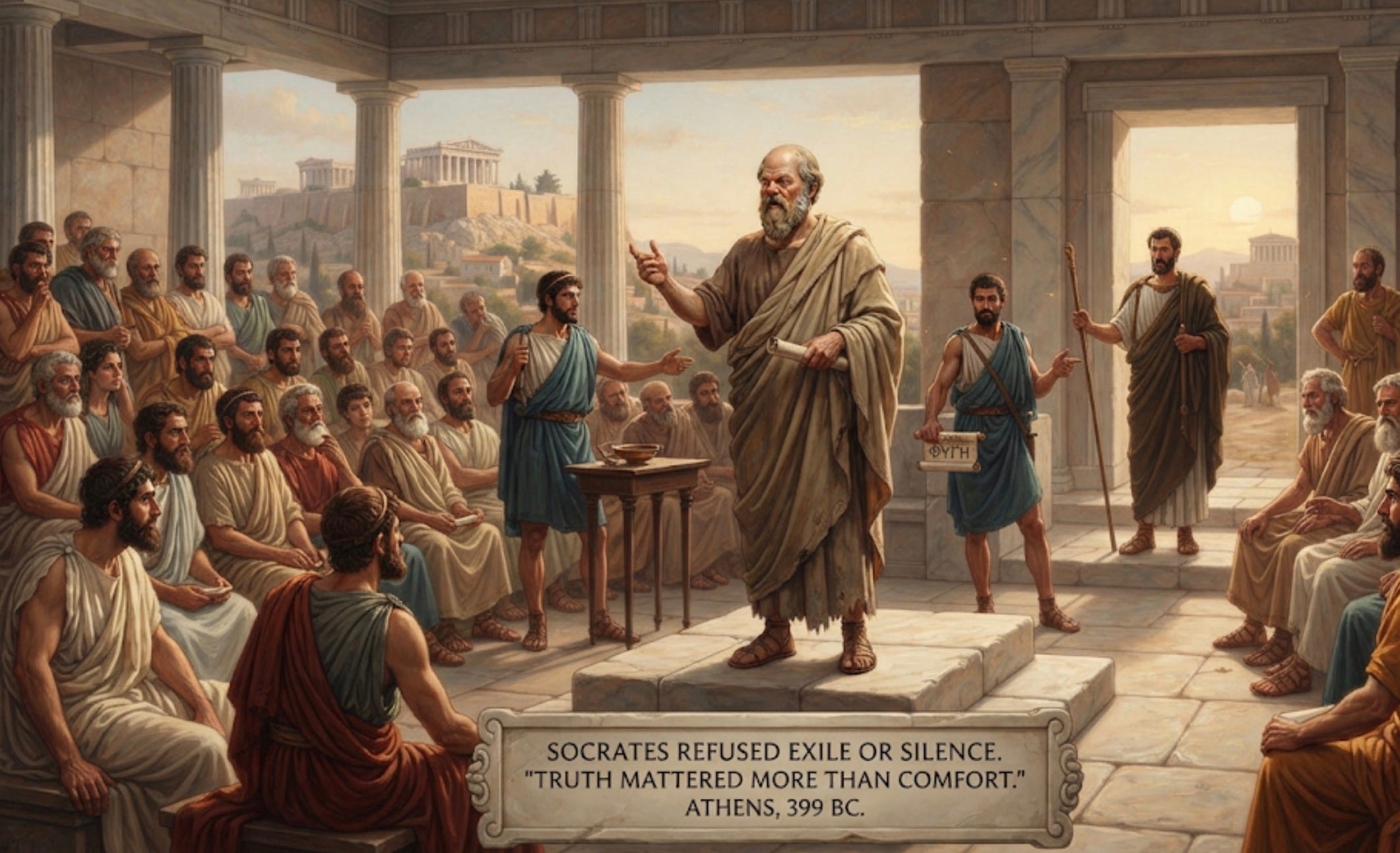
Socrates could have walked out of Athens a free man. The court gave him two ways out. He could leave the city or he could stop asking uncomfortable questions. Either one would have saved his life. He refused both because, to him, asking hard questions was the whole point of being alive. Not to embarrass people. Not to win arguments. Simply because truth mattered more than comfort.
I’ve been thinking about that lately because there is one question I keep asking in Alaska that almost nobody seems willing to answer.
What’s your plan?
For years I’ve watched the same pattern repeat itself. A new project comes along, whether it’s the Susitna-Watana Dam, Ambler Road, the Alaska Gas Line, West Susitna Road, ANWR, timber sales, data centers, or another mining project, and before anyone has finished reading the proposal, somebody is organizing to stop it.
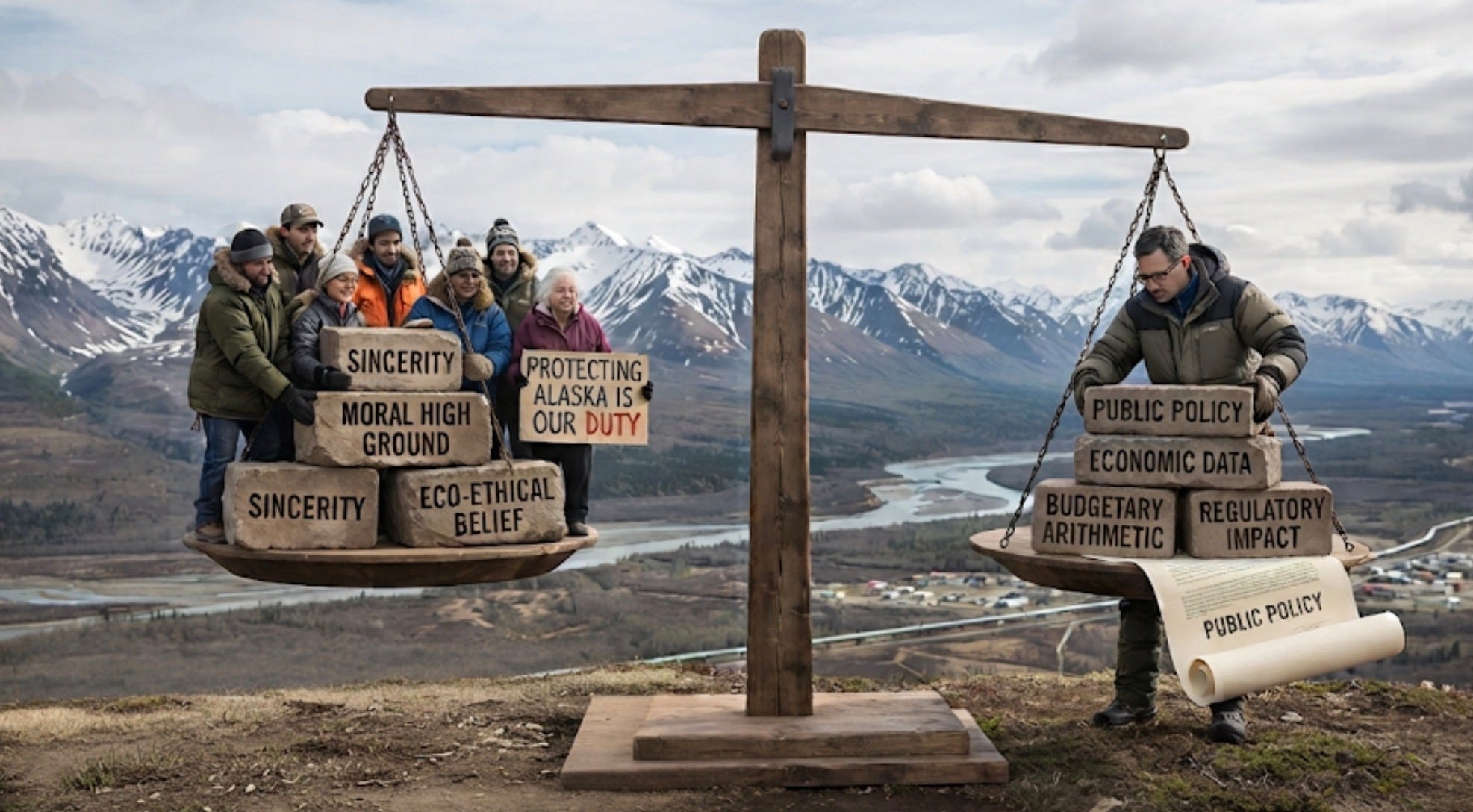
Many of these groups genuinely believe they occupy the moral and eco-ethical high ground. They see themselves as protecting Alaska, and I don’t doubt that many are sincere. But sincerity and public policy aren’t the same thing. Sooner or later, every public policy has to survive the arithmetic.
The schools still have to open in August. Troopers still answer calls. Snow still has to be plowed. Bridges still have to be inspected. Heating oil in many rural communities still costs more than most Alaskans think is possible. We still haven’t restored the Talkeetna Trooper Post. Willow still needs a fire station. We still argue every year about paying the Permanent Fund Dividend the law says belongs to the owners of the resource.
None of those obligations disappear because another development project gets voted down. None dissapear because of the fear of a project, mine, or business. Every session the Legislature still has to pass a balanced budget. That’s why I keep coming back to the same question.
What’s your plan?
I don’t ask that as a debating trick. I mean it literally.
Suppose you succeed. Suppose the mine doesn’t happen, the road doesn’t get built, the timber sale is canceled, the data center goes to another state, and the carbon sequestration project dies. Let’s assume every one of those victories goes exactly the way you hoped.
Now what?
Walk me through the next budget. Where does the money come from?
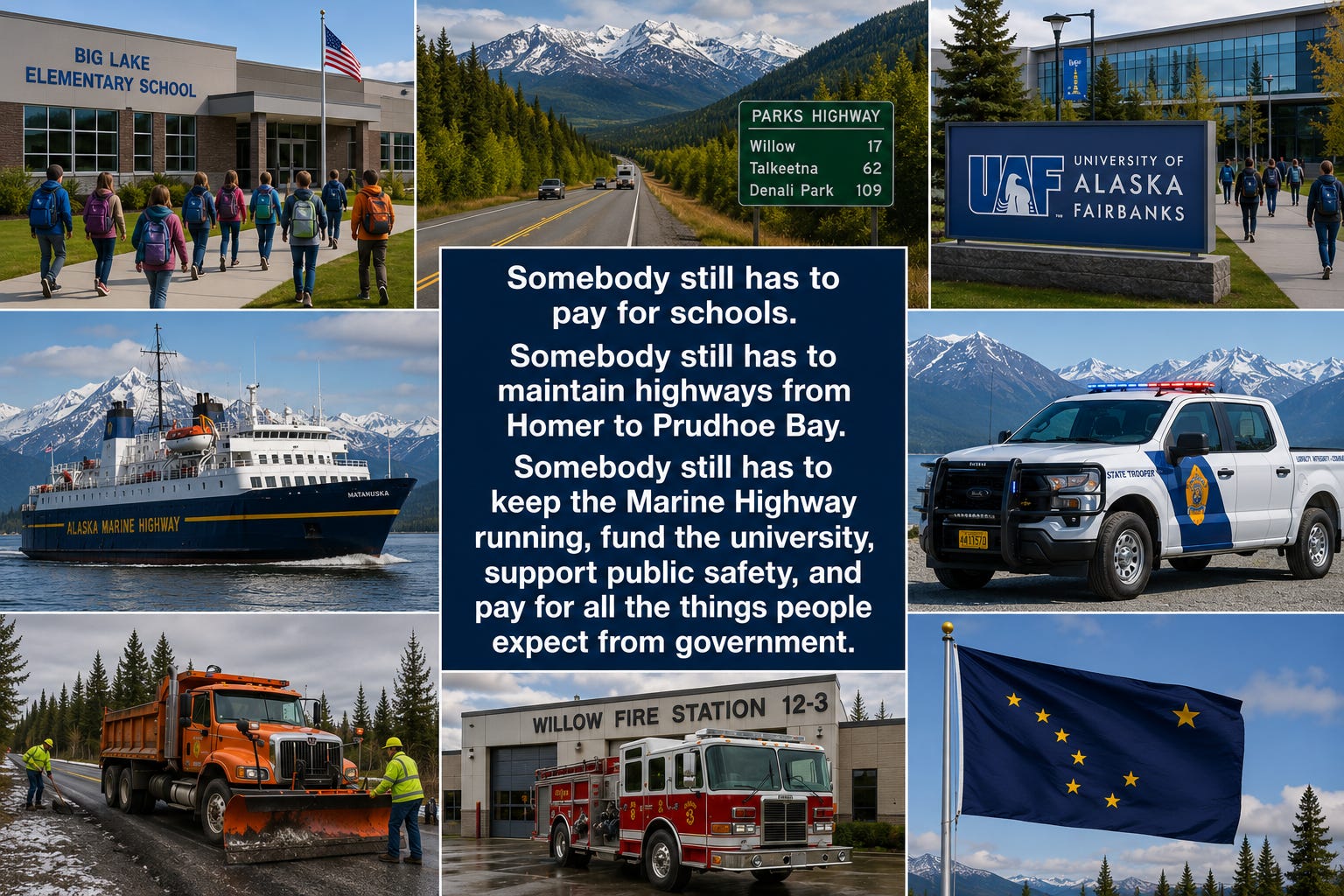
I’ve asked that question for years, and I honestly can’t remember hearing a complete answer. What I usually hear is another explanation of why the project was a bad idea or how it won’t make “enough” money to matter. Sometimes those arguments are thoughtful. Sometimes they’re persuasive. Sometimes they’re right.
But that’s still only half the conversation.
The budget is still there waiting for us next January.
Government has only so many ways to pay its bills. We can develop resources and encourage private investment. We can collect more taxes. We can reduce what government does. Usually it’s some combination of all three. There isn’t a secret fourth choice hidden somewhere in the Constitution.
If someone tells me they oppose offshore drilling because the environmental risk is simply too great, and they’re willing to support a state income tax to replace that revenue, I respect that position. We disagree, but they’ve finished the thought.
If someone tells me they don’t want another road into a mining district because they value wilderness more than economic development, and they’re willing to accept fewer public services as the price of that decision, I respect that too. Again, they’ve finished the thought. They’ve made a choice, and they’re willing to own the consequences.
What I have a much harder time respecting is opposition that never gets past the word no.
That’s where too much of Alaska’s political conversation lives these days. No mine. No road. No timber sale. No drilling. No data center. No carbon sequestration.
Ok. But finish the thought.
Those bills don’t disappear because another permit was denied or another lawsuit succeeded.
The Legislature still has to balance the budget.
Investment goes where people are willing to permit it. If Wyoming approves carbon sequestration projects and Alaska doesn’t, the investment goes to Wyoming. If Texas builds data centers while we spend years arguing about whether we should even consider one, Texas gets the jobs and tax revenue. Canada isn’t waiting for us to decide whether to sell natural gas. They’re already signing export contracts. Mining companies invest where projects have a reasonable chance of being approved. Timber production shifts somewhere else.
None of that happens because those places are smarter than Alaska. It happens because they eventually make a decision.
Then we look around a few years later and wonder why we can’t afford the things we all agree are important.
That’s the part I don’t understand.
We’re trying to hold three ideas in our heads at the same time. We want excellent schools, better roads, more law enforcement, a full Permanent Fund Dividend, and no statewide taxes. At the same time, many of the same voices oppose almost every major project that could help generate the private investment and state revenue needed to pay for those things.
I don’t know how that math works.
Maybe someone else does. If they do, I’d honestly like to hear it.
I’ve voted against projects before, and I’ll do it again if I think they’re bad for Alaska. But when I vote no, I owe my constituents more than a press release. If I’m taking one option off the table, I owe them an explanation of what replaces it. That’s part of the job. Governing isn’t just deciding what we’re against. It’s deciding what we’re for and being honest about what it costs.
Socrates understood that asking uncomfortable questions comes with a price. Sometimes people would rather attack the question than answer it.
That’s fine.
I’ll keep asking anyway.
What’s your plan?
Because if all you’ve got is no, you don’t have a policy.
You have an objection. And objections are not a plan.