

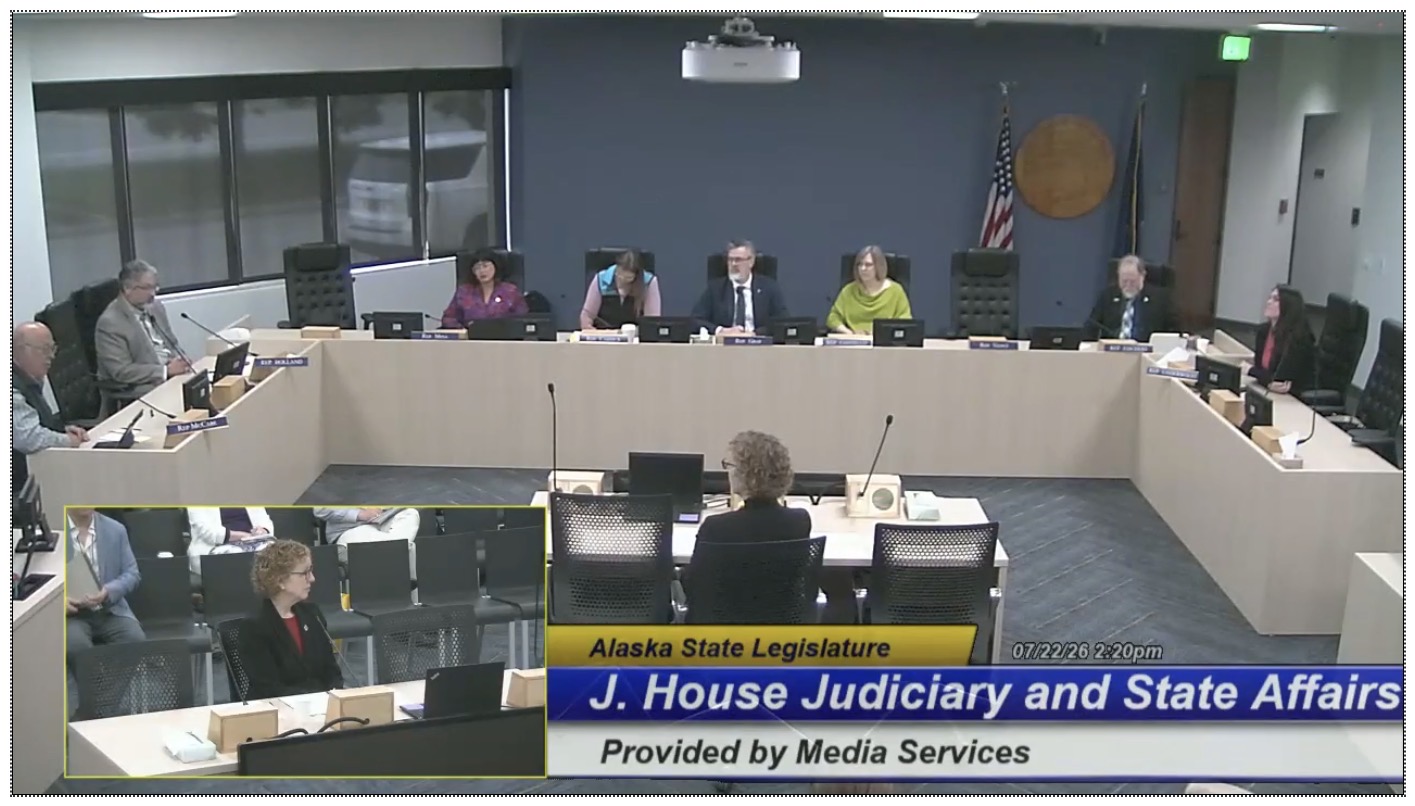
At a recent joint hearing of the House Judiciary and State Affairs committees, Chair Andrew Gray argued that ranked-choice voting did not create the Decoy Daniel situation. His claim is that same-name candidates existed before RCV, so the real issue is ballot access, and anyone blaming RCV is confusing the ballot with the reform.
That is not right. Once you look at the difference between the old system and the new one, the claim falls apart.
Under Alaska’s old closed primary, a same-name candidate could file against a sitting senator. But the system decided his fate before November. He had two choices. Beat the incumbent in the Republican primary, which almost never happens against a two-term senator with the party behind him. Or lose and go home. The party was the filter. Democrats could not vote on the Republican ballot. Only one Republican name went to the general election.
The top-four open primary changes that. The challenger no longer needs to beat the incumbent. He only needs to finish in the top four of a nonpartisan field. Once he clears that bar, he sits on the November ballot next to the real senator and creates the confusion the strategy wants. This is why Republicans fought to keep a closed primary.
Chair Gray can call this a ballot access issue. But ballot access under a closed primary and ballot access under a top-four jungle are two different things. The difference comes from the reform he defends.
Under the old closed primary, party ballots were separate. Republicans got a Republican ballot. Democrats got a Democratic ballot. A same-name Republican challenger faced only Republican and Republican-leaning voters. Democratic voters had no way to touch that race.
That firewall made the decoy strategy pointless. A Democratic operative trying to hurt a Republican incumbent would have needed Republican voters to cast the wrong vote using only Republican turnout. That is not a strategy. In decades of closed primaries, Alaska never saw a serious decoy candidate for a major statewide office. The structure blocked it.
The top-four open primary removes that firewall. Every voter gets the same ballot. Democratic turnout, Democratic money, and Democratic operatives can now help a Republican-labeled decoy advance.
That is what is happening here. Metadata reviewed by Fox News shows the launch announcement for Daniel J. Sullivan of Petersburg was written by Amber Lee, a Democratic consultant who worked on Mary Peltola’s 2022 special election win, her 2022 general election win, and her 2024 loss. She has a professional and financial interest in Peltola winning the Senate seat, and has said publicly she wants Peltola to unseat the incumbent this year. Under the old system, her help would have been worthless because her voters could not have voted for that candidate. Under the current system, her help is the point.
The chair’s argument requires you to pretend the primary structure did not change in 2020. It did.
We only have to watch who fights hardest to defend RCV to learn who it serves. Scott Kendall, the Anchorage attorney who wrote the 2020 ballot measure, is still the attorney defending it in court every time it faces a challenge. When the 2024 repeal failed by fewer than a thousand votes, Kendall celebrated. Then he went to court to try to block the 2026 repeal from qualifying for the ballot. That is not the behavior of someone defending a popular reform.
Unite America, a national group that has spent tens of millions pushing RCV across the country, poured money into the original 2020 Alaska campaign. They are back this year spending to defeat the repeal. Alaska is one piece of a larger national project run by people who do not live here and will not live with the results.
Amber Lee. Scott Kendall. Unite America. That is the coalition defending Decoy Daniel’s place on the ballot.
Some say voters can just rank both Sullivans and it will sort itself out. That treats voters like they live in a lab. A voter who thinks he is ranking the incumbent first but is actually ranking the retired teacher from Petersburg has already given his first-choice vote to the wrong man. If Decoy Daniel advances on those confused votes, the incumbent may be the one eliminated. Second-choice rankings do not save you from that. Confusion and exhausted ballots get worse under RCV, not better.
Confusion is a feature of this scheme, not a bug. Decoy Daniel knows he cannot win. That is the point. He is on the ballot to create confusion, and RCV makes the effort worthwhile even if he loses.
Chair Gray raised legitimate concerns about how the Division of Elections handled this. And perhaps Director Beecher reached too far. The courts said she did. That’s a fair debate. But the problem the Division was trying to solve is not a problem the old system produced. It is a product of the new system. Under the old system, no elections director ever had to judge a candidate’s intent. The party primary and the separate ballots handled it. That structure is gone.
In 2022 we got the forty-eight-candidate special primary for Don Young’s seat. In 2024 the winner was decided by second- and third-choice votes after the first-choice leader was eliminated. In 2026 we have Decoy Daniel and a governor’s race with seventeen candidates on the same nonpartisan ballot.
Every cycle since RCV took effect has produced a national embarrassment the old system never produced. The chair cannot point to a single election under the previous system that looked like the three we have had under RCV. The burden now sits with the defenders.
In November 2024, voters in Nevada rejected RCV. Voters in Colorado rejected it the same night. The national momentum has flipped. Alaska’s 2020 vote was a squeaker. RCV passed by about one percentage point, roughly 3,700 votes out of 344,000 cast. That is not a mandate.
We do not have to keep it.
If Alaska keeps ranked-choice voting, the top-four primary becomes permanent. Decoy candidates become a repeatable playbook any well-funded operation can run again. The confusion, the exhausted ballots, and the strategic games will continue.
If the repeal passes, the closed primary returns. The firewall goes back up. Same-name decoy schemes go back to being what they were for decades in Alaska: pointless.
None of this would be happening under the system Alaska used to have. That system is on the ballot this November.
Chair Gray is free to keep arguing the reform he defends has nothing to do with the mess it produced. He is a democrat and this is a democratic strategy. Alaskans have watched three cycles of these games.
In November, we can decide whether to watch a fourth.
The Ballad of Decoy Daniel
Now gather close, my neighbors all, and hear a curious tale,
Of a scam that blew northward on a well-financed gale.
It wasn’t born in Talkeetna, nor Nome, nor Katchemak Bay,
But it found Alaska fertile ground, and here it came to stay.They wrapped it up in pretty words, reform from shore to shore,
But every passing election left us wanting something more.There once was only party roads that led to autumn’s fight.
A Republican earned his place before November’s night.
If someone shared his very name and sought to steal the race,
He first had to beat the voters who didn’t know his face.The party was the gatekeeper. The firewall stood strong.
The Democrats chose Democrats. Republicans came along.
A trick could not survive there because the path was plain.
You had to beat your own side first before you sought to reign.Then came the grand experiment that promised something new.
They tore the old gate off its hinges, as reformers often do.
“Top Four,” they proudly called it. One ballot for us all.
They never spoke about the cracks that followed with the fall.Now enters Decoy Daniel, with a name you’ve heard before.
He didn’t need to win the field, just finish in the four.
And suddenly confusion did what it had not before.
The very thing the old rules stopped was welcome through the door.Some folks cried, “It’s ballot access!” Others swore, “It’s fair!”
But the rules that built the opening had plainly put him there.
The field was broad as tundra. Every voter cast alike.
Confusion found a smoother path than any man could hike.A consultant lit the campfire. Lawyers drew the trail.
National groups supplied the grub and swore they could not fail.
It looked less like Alaska’s way than something shipped up here,
By people who won’t live with it another single year.Now some folks say, “Just rank them both. The system will decide.”
As though mistakes are harmless once the ballots take their ride.
But when a voter marks the wrong man thinking he’s the right,
That first-choice vote is gone before they start the second fight.We’ve watched this picture growing through elections one by one.
Forty-eight upon one ballot. Rankings for Don Young.
Now seventeen for governor. Another curious show.
Each cycle brings another thing the old rules didn’t know.I’ve flown above Alaska through the darkest winter skies.
I’ve learned that when your compass fails, you trust your seasoned eyes.
You do not blame the mountain when the chart is drawn askew.
You fix the course that brought you there. That’s what good pilots do.So this is not of Daniel. He’s only one small part.
It’s of a voting system built to reward a clever start.
Confusion is the strategy. The rules became the tool.
Democrat games that failed before now play the voters for a fool.The snow will fall on Petersburg. The tide will flood Cook Inlet.
Campaign signs will weather till the autumn sun has set.
One choice still belongs to us beneath the northern dome:
To choose the kind of ballot that will guide Alaska home.And if, this coming November, the old firewall returns,
Perhaps we’ll leave behind these tricks for simpler, steadier turns.
For every strange election has a place where it began,
And every trail can still be closed by free Alaskan hands.