


For generations, Americans have been taught that Western civilization simply appeared out of thin air, that freedom is the natural state of mankind, that progress runs on autopilot, and that the world we inherited would have arrived no matter what anyone believed.
It didn’t.
The freedoms we enjoy, the rule of law, representative government, the university, the hospital, the idea of charity toward a stranger, and the belief that every person possesses inherent worth and dignity were not accidents of history, and they were not the default setting of the human race. For most of human history, the strong ruled the weak and called it the order of nature. Something broke that pattern.
What broke it was a civilization rooted in Judeo-Christian principles.
The idea that every human being is created in the image of God transformed the world. In the ancient world, worth was measured by power, birth, or usefulness to the state, and the slave and the emperor were not the same kind of being.
Christianity made the radical claim that they were equal in moral standing before God.
From that conviction came the rest: rights that come from our Creator and not from government, a law that no king or politician stands above, and a duty to care for the poor, the sick, the orphan, and the stranger not as charity from the strong but as obligation between equals.
That foundation built the West.
Our universities began as church schools. Our first hospitals were founded by people who believed a dying beggar bore the image of God. The abolition of slavery was driven in large part by men and women who believed that same truth and who spent decades resisting the economic and political order of their day because they believed it was morally wrong.
Today, that foundation is under assault, not by armies, but by ideas.
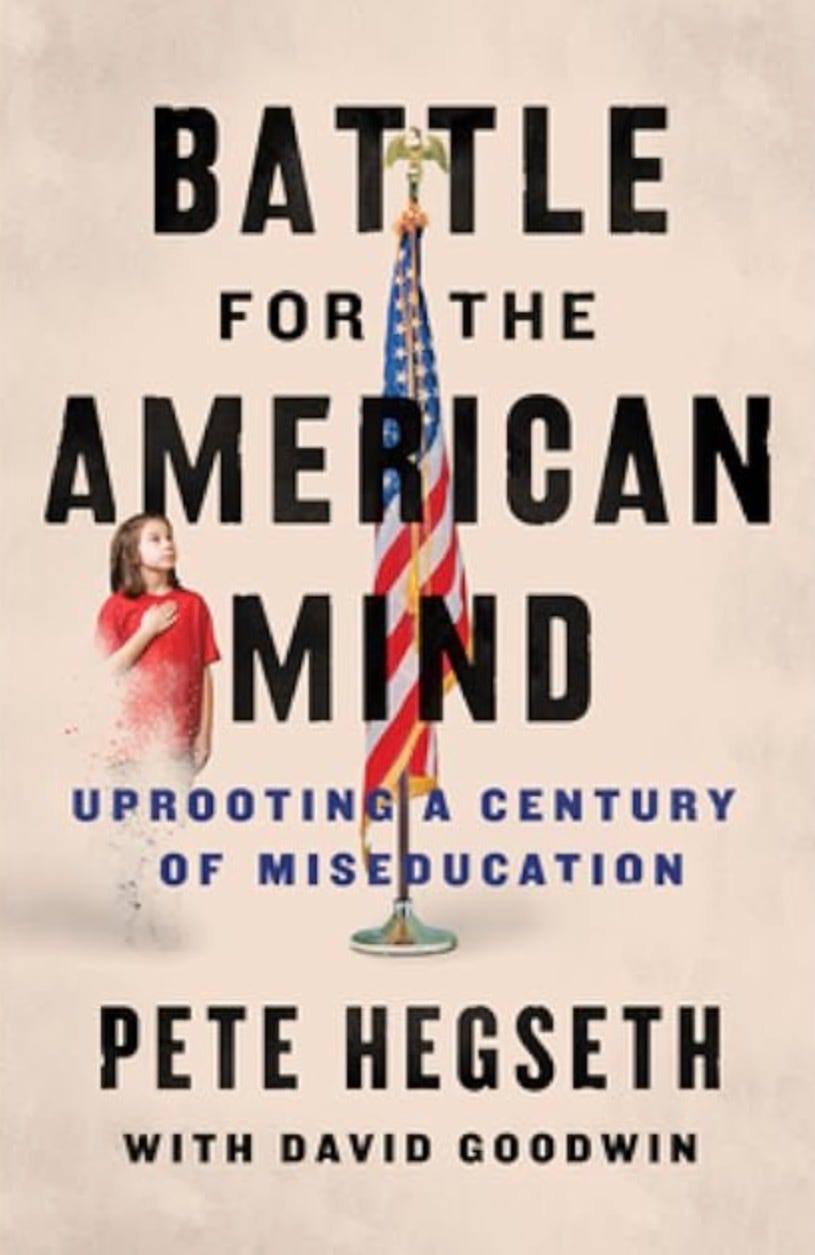
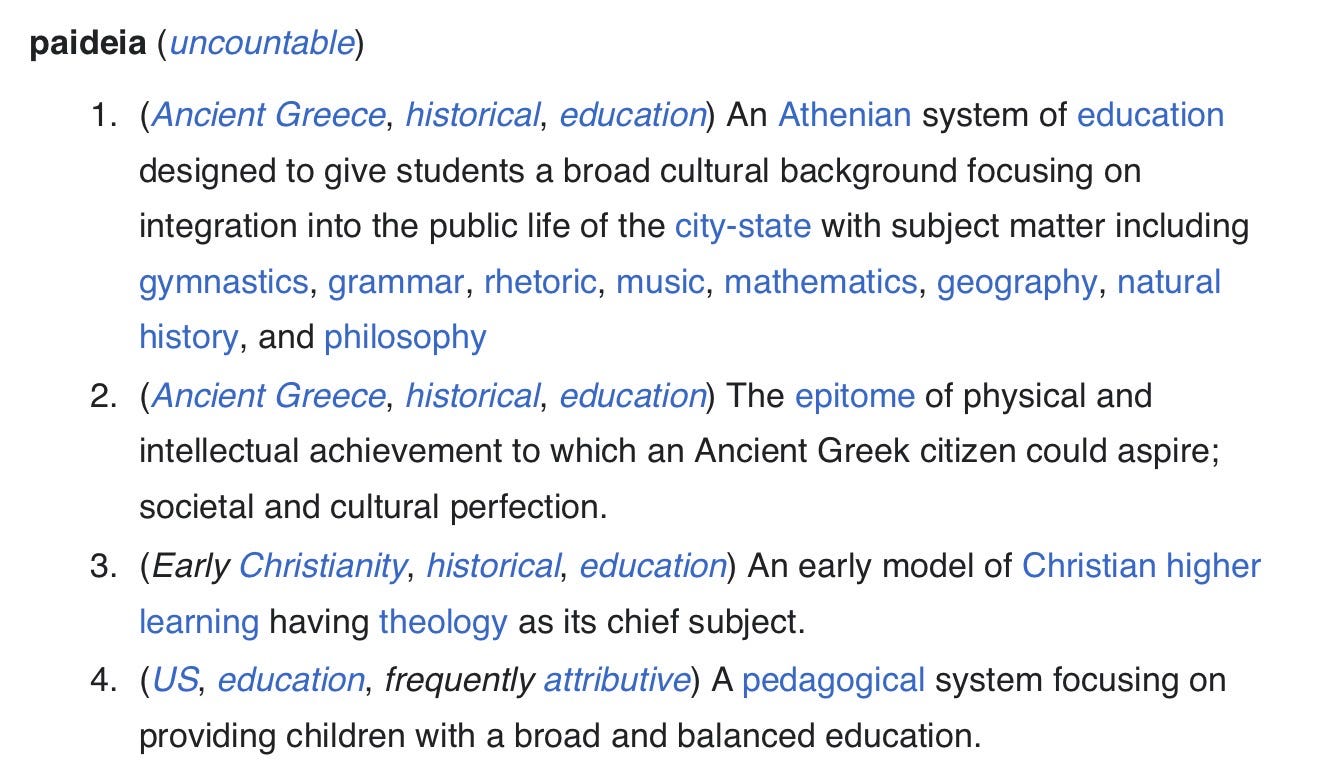
Pete Hegseth, in The Battle for the American Mind, revives an ancient word every parent should understand: paideia. It means more than education. It is the formation of mind, character, loves, and loyalties, the quiet shaping of what a child admires, rejects, and is willing to defend. Every civilization has a paideia. Every society teaches its children what is true, what is good, what is beautiful, and what kind of person they are expected to become.
The question is never whether children will be formed. They will. The question is what they will be formed into.
For most of American history, our paideia was grounded in biblical truth, personal responsibility, family, sacrifice, and love of country. That is not nostalgia, but something written into our founding and carried through our early education.
The Northwest Ordinance of 1787 declared that religion, morality, and knowledge are necessary to good government and the happiness of mankind, and therefore education should be encouraged. Early schoolbooks taught reading through Scripture. Generations learned grammar and virtue together, and civics was taught because self-government requires citizens capable of governing themselves.
That did not happen by accident. It produced the freest and most prosperous nation in history.
Today, a different paideia is taking hold.
Children are increasingly taught that America is defined more by its failures than its founding ideals, that truth is personal preference, that faith belongs only in private life, and that our history should be met with suspicion rather than gratitude. Gratitude has been replaced with grievance, character formation with emotional validation, and objective truth with personal identity. We are not just teaching facts; we are forming a worldview that shapes a generation that asks what it is owed, but rarely what it owes.
Look across Western Europe. Cathedrals that stood for centuries now sit empty, converted, or closed. Birth rates have fallen below replacement levels, and immigration is reshaping entire societies. But the deeper issue is not demographic, it is cultural confidence. A civilization taught to be ashamed of itself will eventually lose the will to defend itself. Europe is not being conquered; it is forgetting why it was worth defending.
Our founders understood this danger clearly.
George Washington warned that religion and morality are indispensable supports of political prosperity. John Adams said the Constitution was made only for a moral and religious people and is wholly inadequate to any other. Alexis de Tocqueville observed that American liberty was sustained not by government power but by moral habits and religious belief working together in public life.
Taken together, they were saying something simple: freedom does not sustain itself. It depends on the character of the people who live under it.
America is not Europe, but it is moving in that direction.
Our churches are still open. Our families are strained but intact. Our love of country is wounded but not gone. We still have time.
But recovery will not come from Washington alone, and it will not come from Juneau alone.
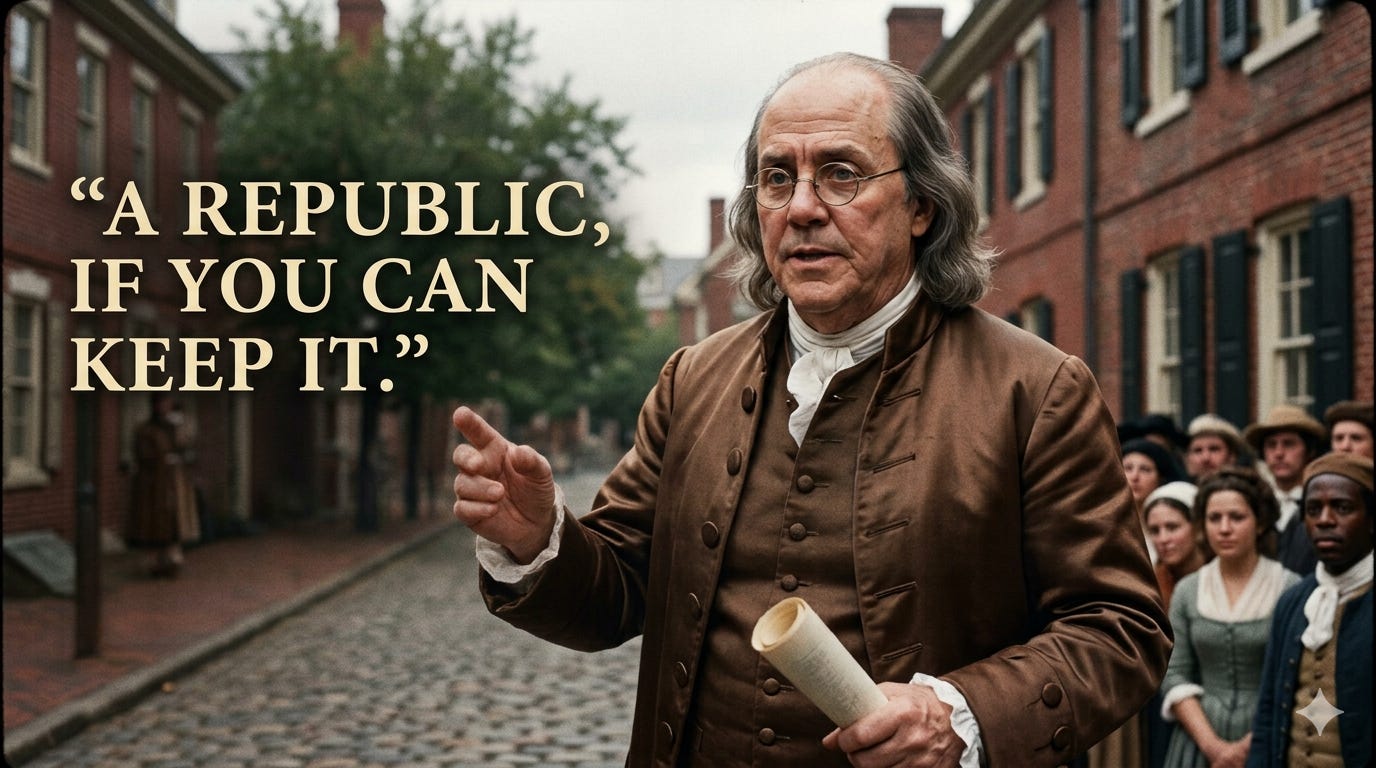
It will come from parents, churches, schools, and communities willing to do the slow work of formation again, teaching young people where rights come from, why liberty requires virtue, and why America, despite every flaw and failure, remains worth preserving.
That formation will not happen by accident. It requires moral leadership in every generation, including from the pulpit. In the era of the Revolution, historians refer to what was called the Black Robed Regiment, pastors who reminded their communities that liberty and responsibility before God could not be separated. Today, as younger Americans show renewed interest in Christianity, that same kind of moral clarity and leadership will matter again in rebuilding a shared paideia.
Legislation can solve problems. Elections matter. But I will say this plainly. If we lose the next generation, no law and no election will recover what is gone. You cannot govern a people into convictions their education spent years teaching them to reject.
Civilizations endure because they remember who they are. They decline when they forget.
Our task is not merely to win the next election. It is to raise the next generation.
We must take back our education system. The future of America depends on it.